
What Is Hardscape?
Hardscape is the built, nonliving part of a landscape. It includes surfaces and structures such as patios, walkways, retaining walls, steps, edging, and outdoor kitchens. Hardscape shapes movement, manages grade changes, and creates usable areas around living features like lawns, trees, shrubs, and planting beds.
Quick Facts About Hardscape
Category
Built landscape feature
Used for
Movement, access, seating, and grade control
Common confusion
Hardscape is not the same as all landscape work
Also called
Hard Landscaping, Built landscape
Often discussed with
Landscape Design, Retaining Wall Installation
Key Takeaways About Hardscape
- Hardscape uses constructed materials, not living plants.
- Base preparation and drainage affect its long-term performance.
- Hardscape does not mean every part of a finished landscape.
How Hardscape Works
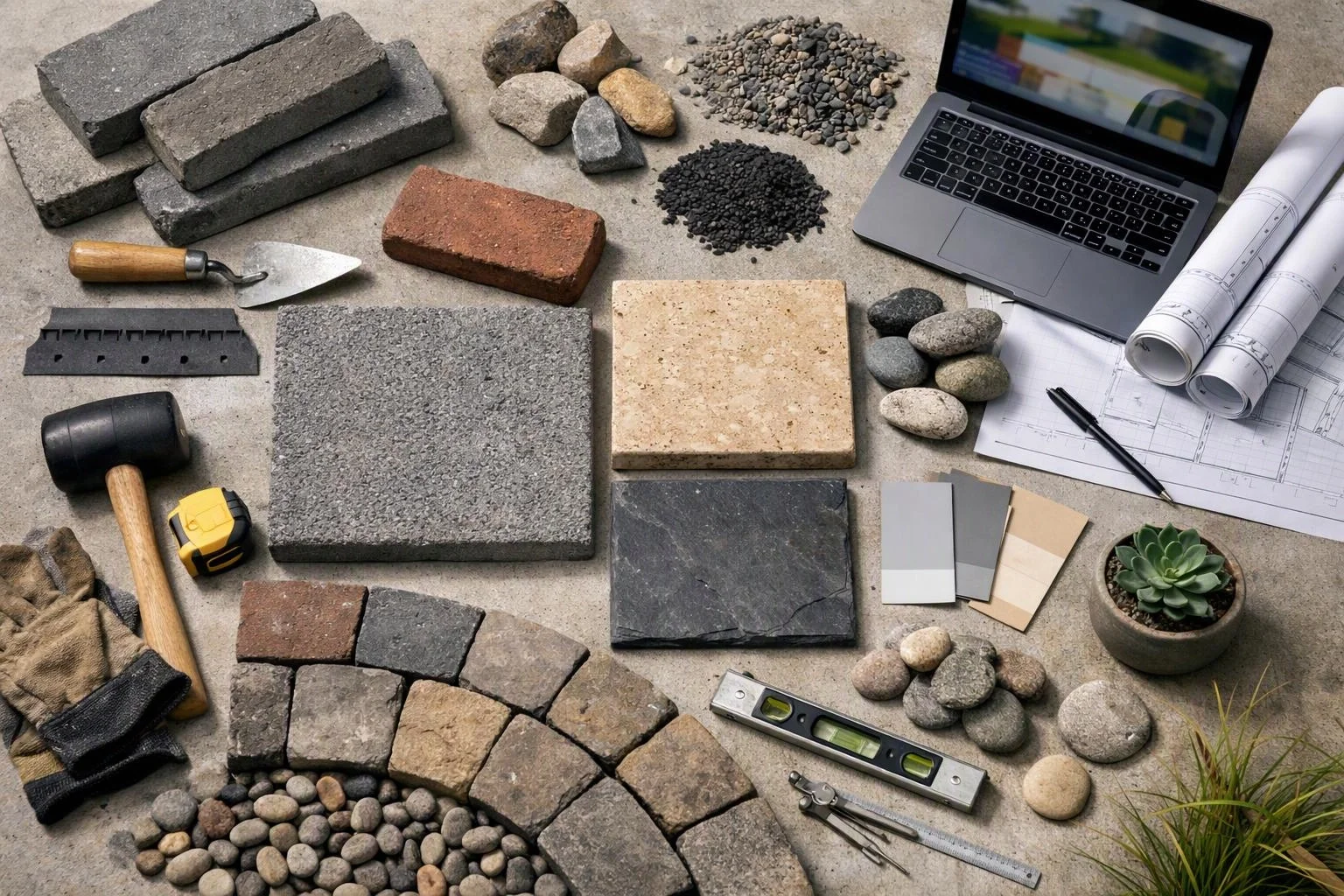
Hardscape works as a planned system of surfaces, structures, and supporting layers. A patio needs a stable subgrade, a compacted base, and a finished surface. A retaining wall needs proper footing, backfill, and drainage. These parts work together to carry weight and direct water.
Related glossary terms: Gravel Base, Edging, Retaining Wall Cap.
Landscape designers place hardscape to guide foot traffic and define outdoor rooms. Materials may include concrete, natural stone, brick, gravel, or pavers. The design also accounts for slopes, door locations, planting areas, and access for maintenance. Good layout connects the home with the yard while leaving space for living plants.
Expert Note
When we design hardscape, we review grades, drainage paths, access points, and how each feature meets the home. Our team also checks the base and edge details so surfaces support daily use and connect cleanly with planting areas.
Hardscape in Practice: A Real-World Example
A Landscape Design plan for a Maple Valley backyard might place a paver patio near the house, connect it to the lawn with a walkway, and use a retaining wall to manage a sloped edge. Planting beds can soften the boundaries around the built features.
Related Services
Related Terms
Gravel Base
Gravel Base is a compacted layer of crushed stone placed beneath pavers, slabs, or other hardscape…
Edging
Edging is a landscape border that separates one surface or planting area from another. Garden edging…
Retaining Wall Cap
A retaining wall cap is a finishing piece placed along the top course of a retaining…
Subgrade
A subgrade is the shaped and compacted ground beneath a finished landscape surface, such as a…
LandscaperMaplevalleywa.com
Have Questions About Hardscape?
Contact LandscaperMaplevalleywa.com for practical guidance on Hardscape and related landscape architect company work in Maple Valley.