
What Is an Underdrain?
An underdrain is a buried drainage system that collects excess water below the soil surface and carries it to a safe outlet. The system usually includes a perforated pipe surrounded by clean drainage rock and wrapped with filter fabric. Underdrains help keep saturated soil away from planting areas, paths, walls, and other landscape features.
Quick Facts About Underdrain
Category
Subsurface drainage
Used for
Moving trapped soil water
Common confusion
Often confused with French drains
Also called
Drainage Underlay, Subsurface drain
Often discussed with
Yard Drainage, French Drain Installation
Key Takeaways About Underdrain
- Perforations let groundwater enter the buried pipe.
- A proper outlet is needed for collected water.
- An underdrain is not the same as a surface drain.
How Underdrain Works
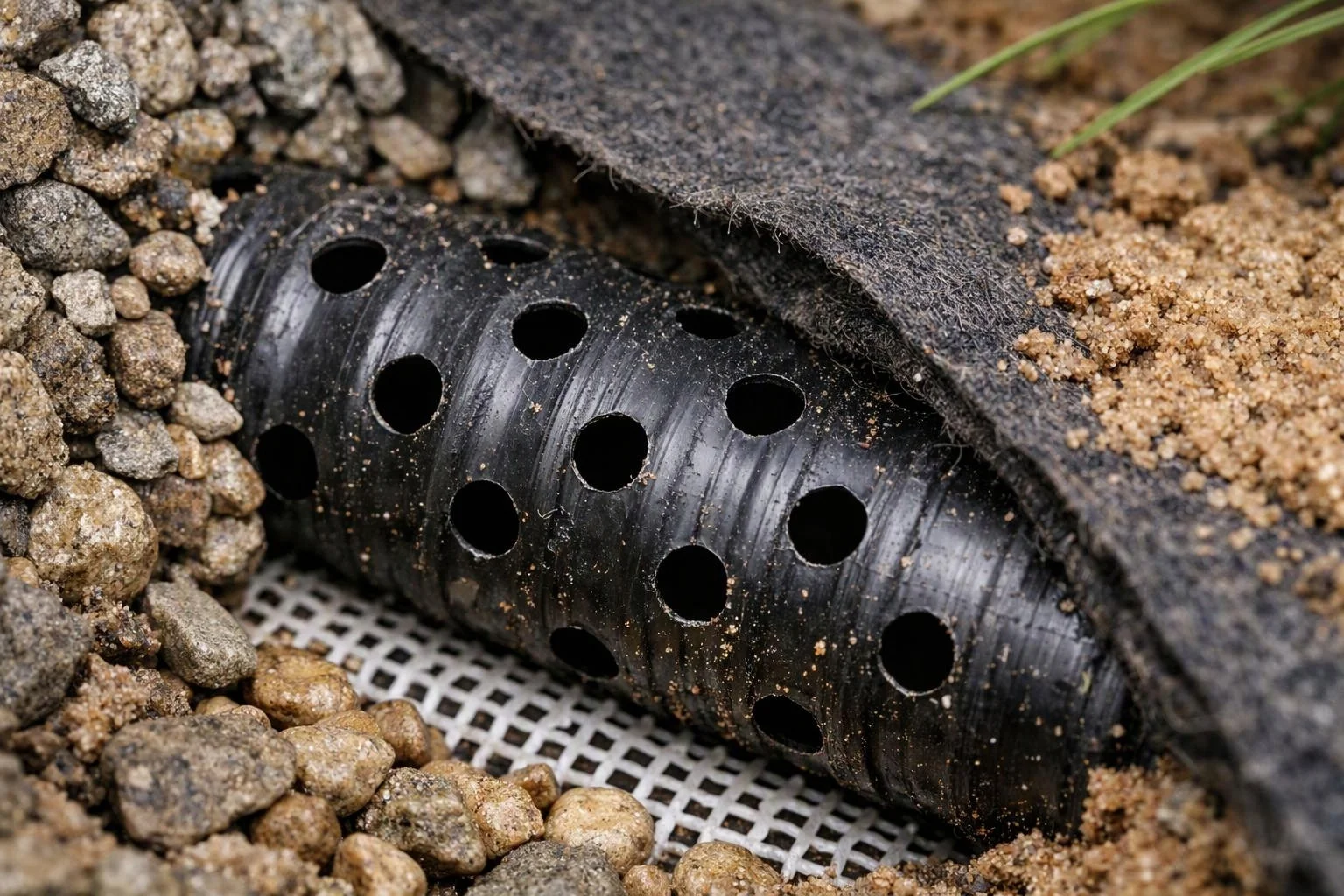
An underdrain collects water below grade through openings in a perforated pipe. Water passes through surrounding drainage rock, enters the pipe, and flows toward an approved discharge point or connected drainage system.
Related glossary terms: Catch Basin, Drainage Swale, Infiltration Trench.
Filter fabric helps keep soil from filling the rock and pipe. The trench must follow a useful slope, and the outlet must remain clear. A surface drain collects water from the ground above, while an underdrain addresses water moving through or sitting in the soil.
How Landscapers Use It
Underdrains can support planting beds, lawn areas, walkways, retaining walls, and other landscape features. The design depends on soil type, water flow, available outlet locations, and the feature being protected.
Expert Note
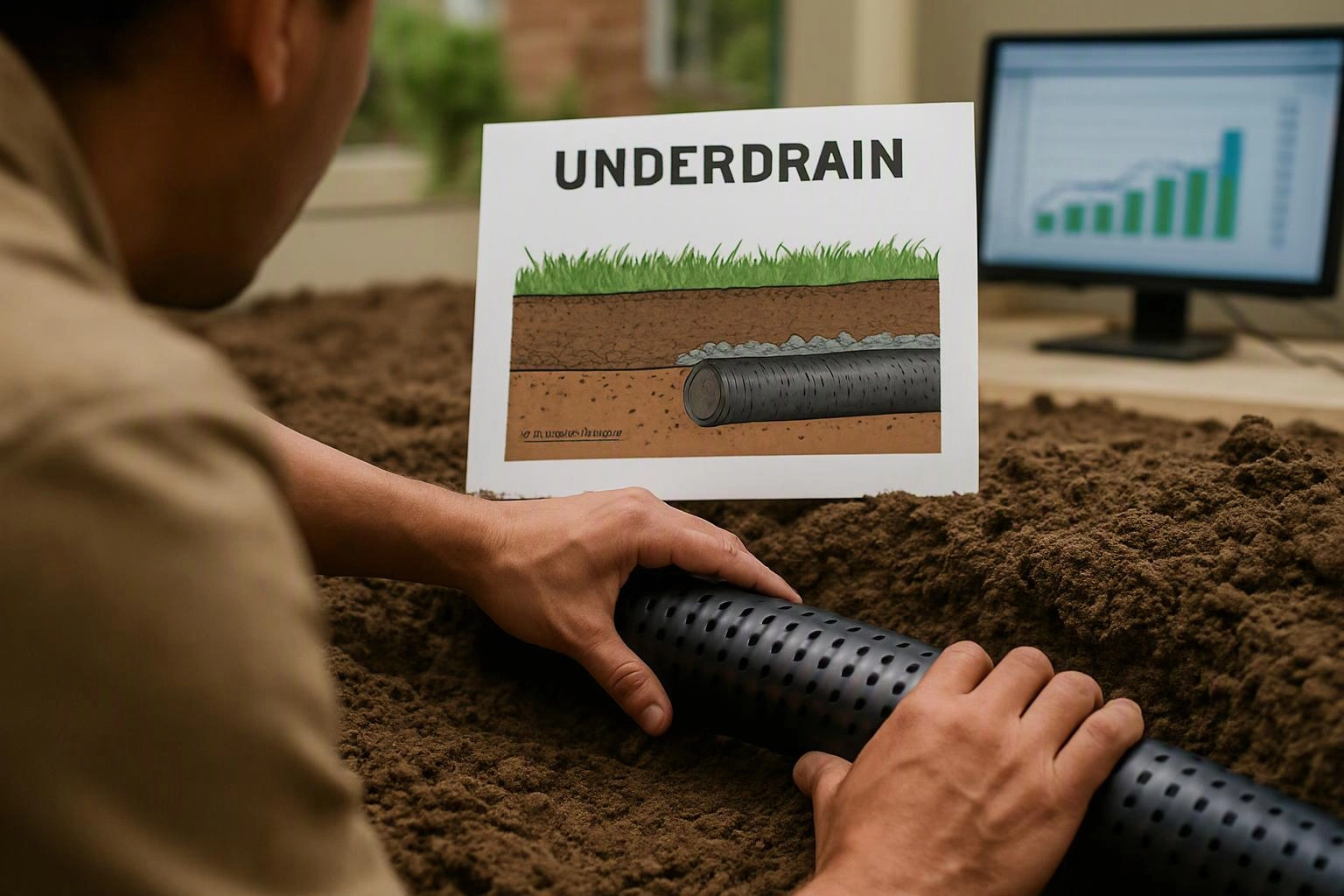
When we plan yard drainage, we trace where subsurface water collects and where it can safely discharge. We check the trench path, pipe slope, rock layer, fabric placement, and outlet so soil does not clog the system.
Underdrain in Practice: A Real-World Example
A sloped yard may stay soggy below a planting bed after rain. An underdrain can collect water beneath the bed and guide it toward a suitable outlet, helping the soil drain more freely.
Related Services
Related Terms
Catch Basin
A catch basin is a drainage container set below a grate that collects stormwater and sediment…
Drainage Swale
A drainage swale is a shallow, gently sloped channel that guides stormwater across a landscape. The…
Infiltration Trench
An Infiltration Trench is a shallow, gravel-filled channel that collects stormwater and lets the water soak…
Sump Pump
A Sump Pump is a powered device that removes collected water from a low drainage pit…
LandscaperMaplevalleywa.com
Have Questions About Underdrain?
Contact LandscaperMaplevalleywa.com for practical guidance on Underdrain and related landscape architect company work in Maple Valley.