
What Is Geotextile Fabric?
Geotextile Fabric is a synthetic textile placed in soil to separate, filter, reinforce, or drain landscape materials. In retaining wall work, the fabric helps keep fine soil from mixing with gravel behind the wall. Its open structure allows water to pass while limiting soil movement that can reduce drainage performance.
Quick Facts About Geotextile Fabric
Category
Soil separation and drainage material
Used for
Retaining wall backfill
Common confusion
Not the same as weed-control fabric
Also called
Landscape Filter Fabric, Geofabric
Often discussed with
Retaining Wall Installation
Key Takeaways About Geotextile Fabric
- It separates soil from gravel without forming a solid barrier.
- Proper placement supports drainage behind retaining walls.
- It isn't the same as decorative landscape weed fabric.
How Geotextile Fabric Works
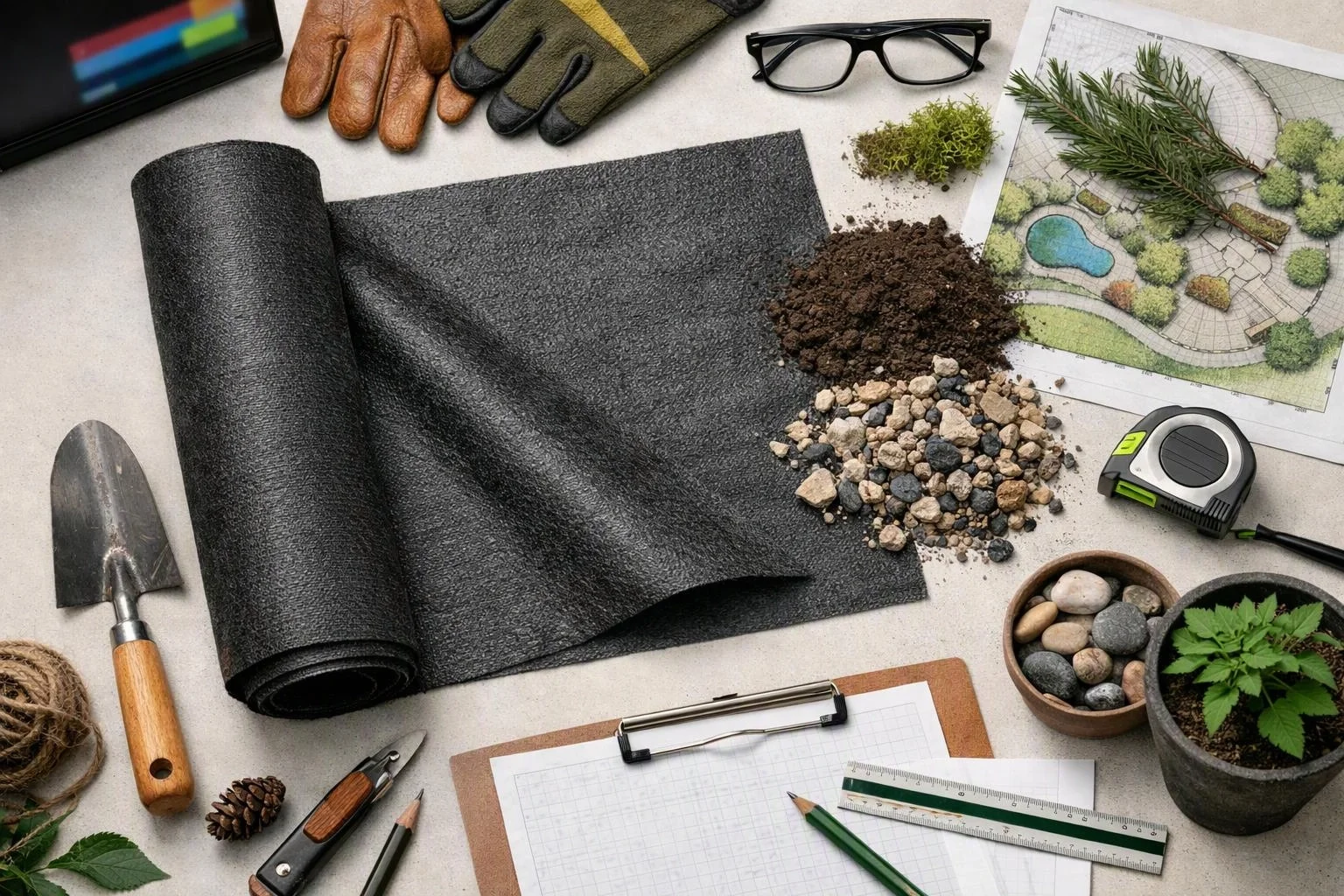
Geotextile Fabric works by separating soil layers while allowing water to move through the material. The fabric has small openings that limit soil migration into clean drainage gravel. This keeps the gravel more open and helps water reach the wall's drainage system.
Related glossary terms: Landscape Fabric, Gravel Base, Underdrain.
On a retaining wall, installers place the fabric between native soil and selected backfill. The material may also wrap around an underdrain when the design calls for added separation. Fabric type depends on soil texture, drainage needs, and the wall design.
Retaining Wall Placement
- Extend the fabric along the soil-facing side of the wall.
- Keep seams secure and avoid gaps where soil can enter.
- Cover the fabric with backfill before sunlight can weaken it.
Expert Note
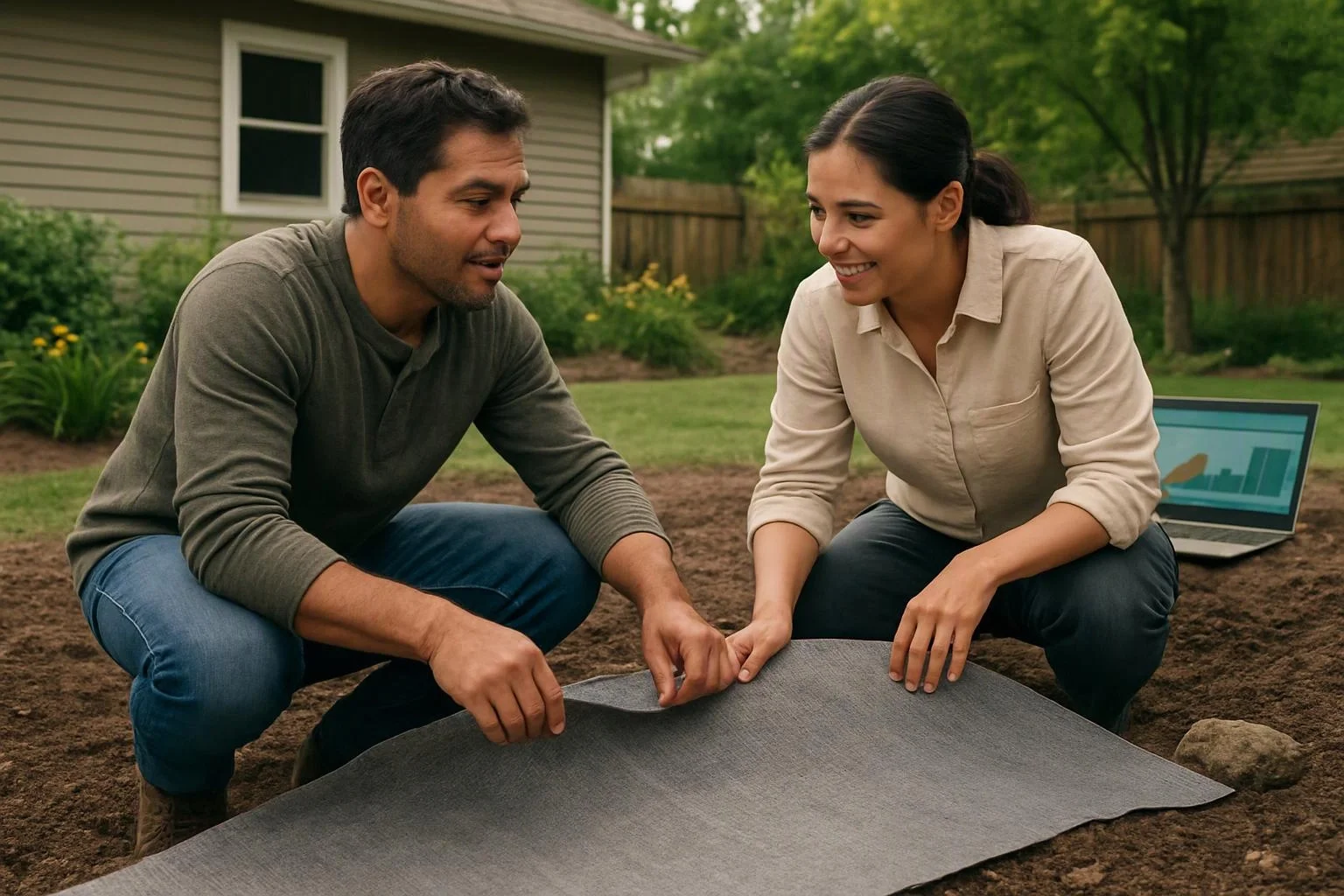
When we install retaining walls, we check the soil-facing area before placing fabric. We match the fabric placement with the drainage layer and backfill. Our team also looks for folds, gaps, and exposed sections that could let soil enter the gravel.
Geotextile Fabric in Practice: A Real-World Example
A sloped Maple Valley yard needs a retaining wall beside a planting area. The crew places geotextile fabric between the hillside soil and drainage gravel, so water can move through while fine soil stays out of the gravel.
Related Services
Related Terms
Landscape Fabric
Landscape Fabric is a porous sheet placed over soil to limit weed growth while allowing water…
Gravel Base
Gravel Base is a compacted layer of crushed stone placed beneath pavers, slabs, or other hardscape…
Underdrain
An underdrain is a buried drainage system that collects excess water below the soil surface and…
Retaining Wall Cap
A retaining wall cap is a finishing piece placed along the top course of a retaining…
LandscaperMaplevalleywa.com
Have Questions About Geotextile Fabric?
Contact LandscaperMaplevalleywa.com for practical guidance on Geotextile Fabric and related landscape architect company work in Maple Valley.