
What Is a Weep Hole?
A weep hole is a small opening built into a retaining wall to let trapped water drain through. The opening reduces water pressure behind the wall and helps protect the wall from movement caused by saturated soil. Weep holes are commonly placed near the wall base and connect to drainage material.
Quick Facts About Weep Hole
Category
Retaining wall drainage feature
Used for
Releasing water pressure
Common confusion
Not the same as a surface drain
Also called
Weep Drain
Often discussed with
Retaining Wall Installation, Yard Drainage
Key Takeaways About Weep Hole
- A weep hole is an opening, not a pipe or surface drain.
- Drainage material helps keep soil from blocking the opening.
- Weep holes do not replace proper wall drainage design.
How Weep Hole Works
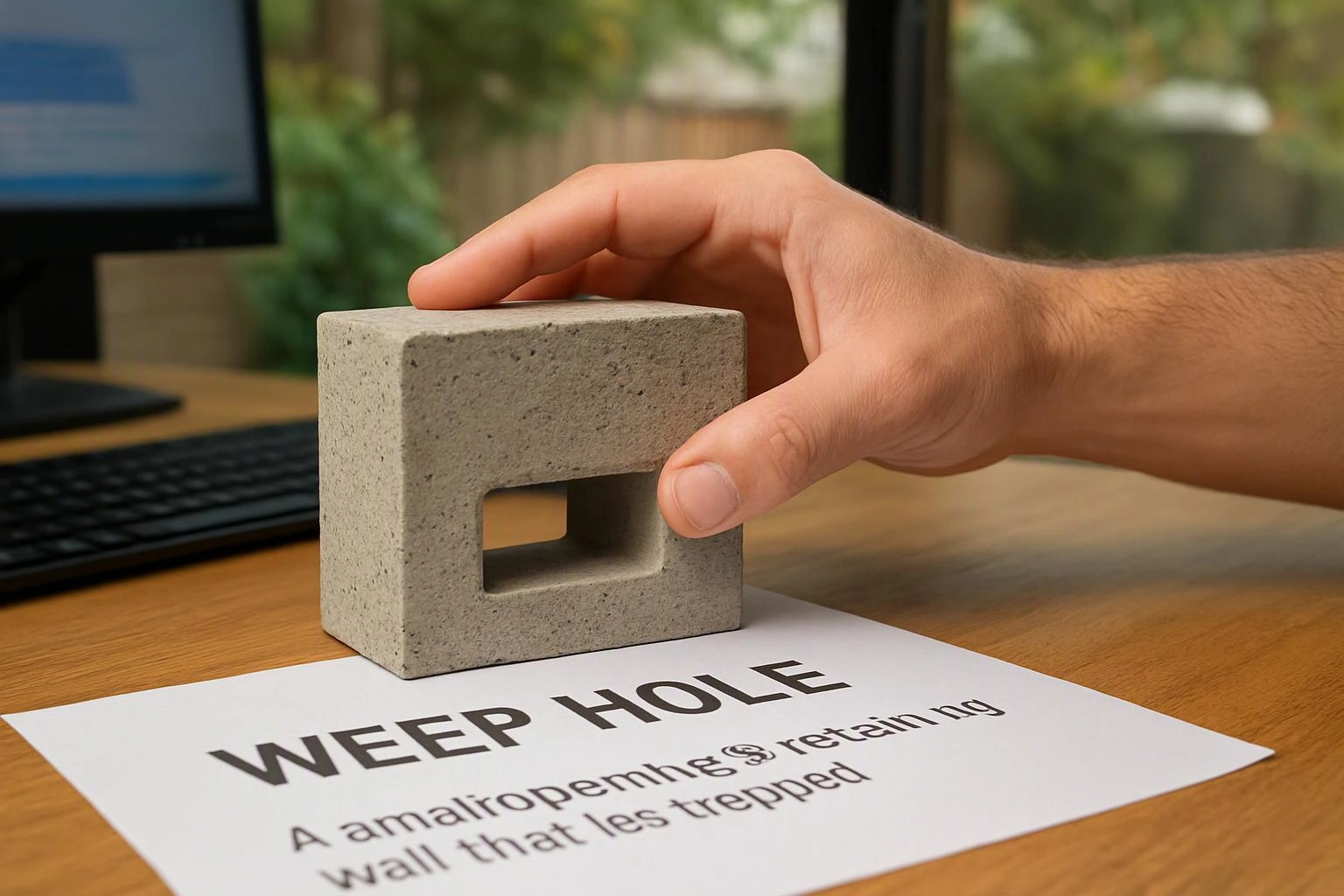
A weep hole gives water behind a retaining wall a planned exit through the wall face. Water moves through clean drainage stone or another drainage layer, then leaves through the opening. This path helps limit pressure against the wall.
Related glossary terms: Retaining Wall Cap, Underdrain, Gravel Base.
During retaining wall installation, the opening must stay clear so water can pass through. Filter fabric or drainage stone can help keep fine soil from washing into the opening. A blocked hole may stop draining, even when the wall has a suitable outlet.
Retaining wall drainage often includes more than weep holes. A drainage pipe may carry water along the wall base and discharge it at a safe location. The wall design determines which drainage parts work together.
Expert Note
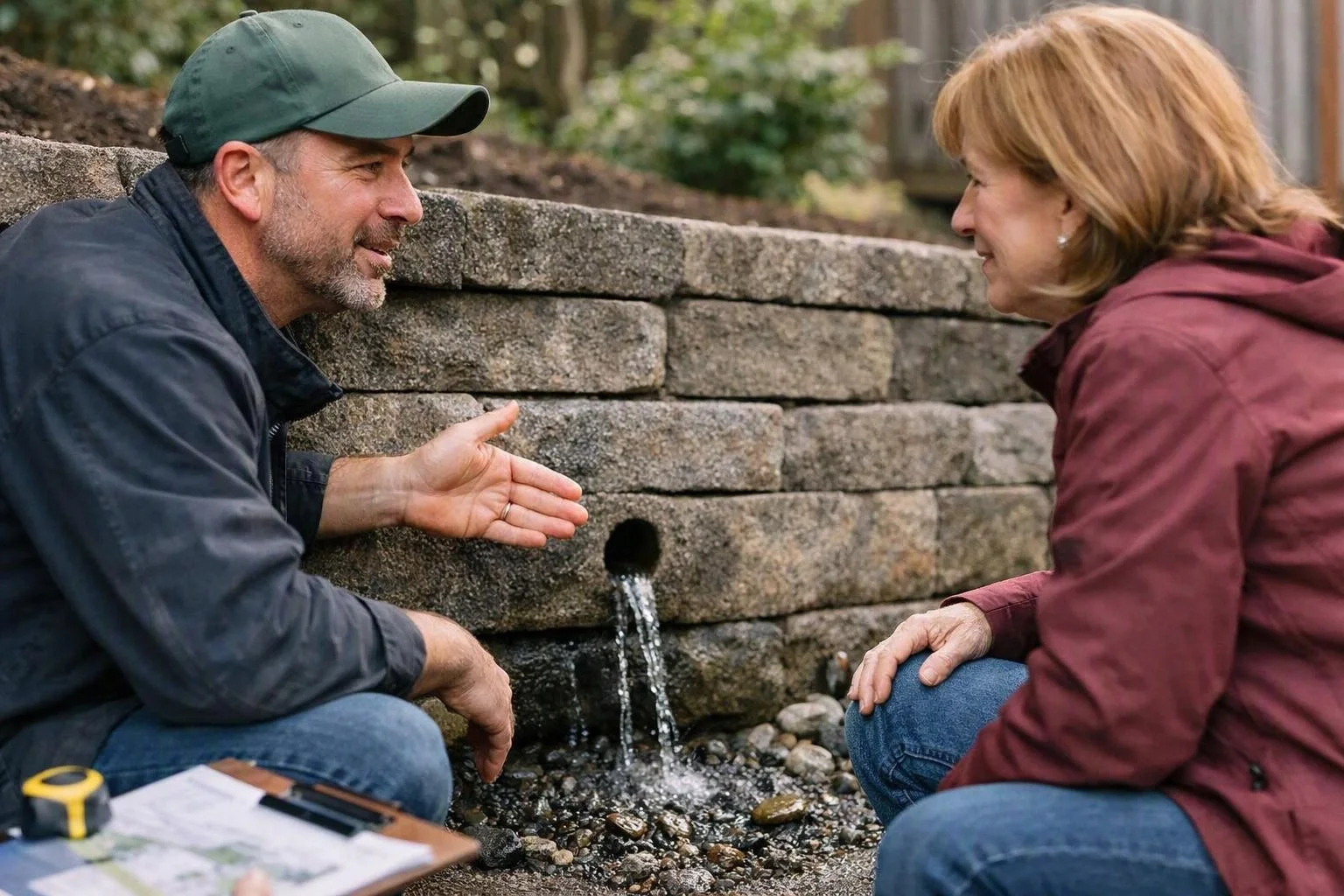
When we plan retaining wall installation, we check how water will move behind the wall and where it can exit. We place drainage features so soil stays supported while water has a controlled path out. We also check that outlets remain open after backfill and finish work.
Weep Hole in Practice: A Real-World Example
A retaining wall beside a sloped yard may collect water behind its blocks. Weep holes allow that water to leave through the wall face instead of building pressure behind the structure.
Related Services
Related Terms
Retaining Wall Cap
A retaining wall cap is a finishing piece placed along the top course of a retaining…
Underdrain
An underdrain is a buried drainage system that collects excess water below the soil surface and…
Gravel Base
Gravel Base is a compacted layer of crushed stone placed beneath pavers, slabs, or other hardscape…
Drainage Swale
A drainage swale is a shallow, gently sloped channel that guides stormwater across a landscape. The…
LandscaperMaplevalleywa.com
Have Questions About Weep Hole?
Contact LandscaperMaplevalleywa.com for practical guidance on Weep Hole and related landscape architect company work in Maple Valley.