Designing a Landscape for Slopes, Wet Areas, and Drainage Challenges
Landscape design for sloped and wet yards starts with observing water flow, soil, slope stability, and site access. At LandscaperMaplevalleywa.com, we combine grading, drainage, planting, erosion control, and retaining wall planning into one site-specific design.
Written by Adam Gorski · 29 years of local experience
Request an EstimateWhat Should a Landscape Plan Check on a Sloped or Wet Yard?
A landscape plan should check how water moves, how stable the soil is, and how the yard will be used.
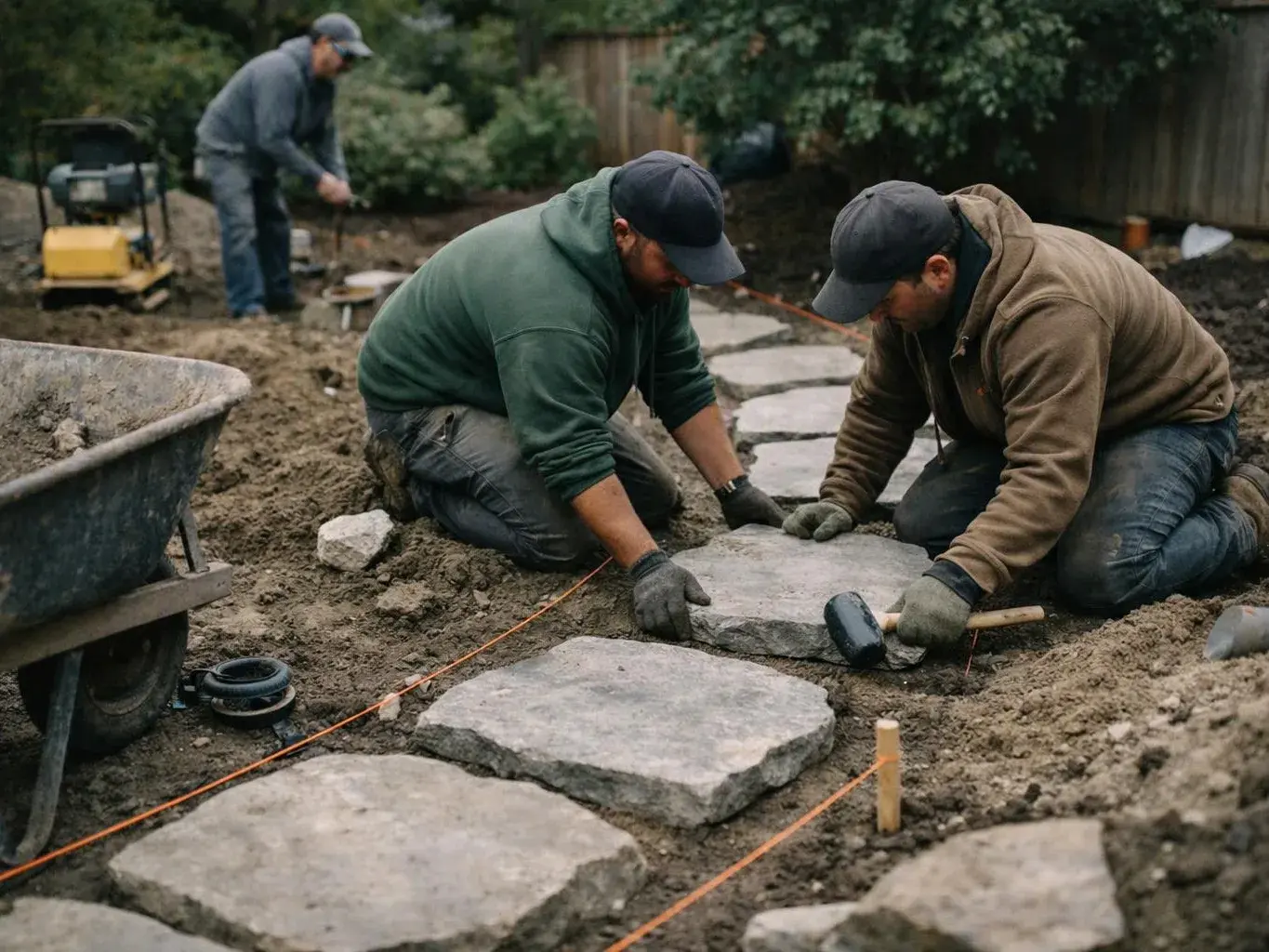
Our site assessment reviews the slope, soil, surface water, groundwater, sun exposure, and site access. We also note where water collects, where surface runoff travels, and where people need safe access.
Soil type affects planting, grading, and slope stability. Sun exposure guides plant selection, while site access affects how materials and equipment can reach the work area.
How Do You Landscape a Sloped Yard?
A sloped yard is landscaped by controlling grade changes, slowing runoff, protecting soil, and creating usable planting or living areas.
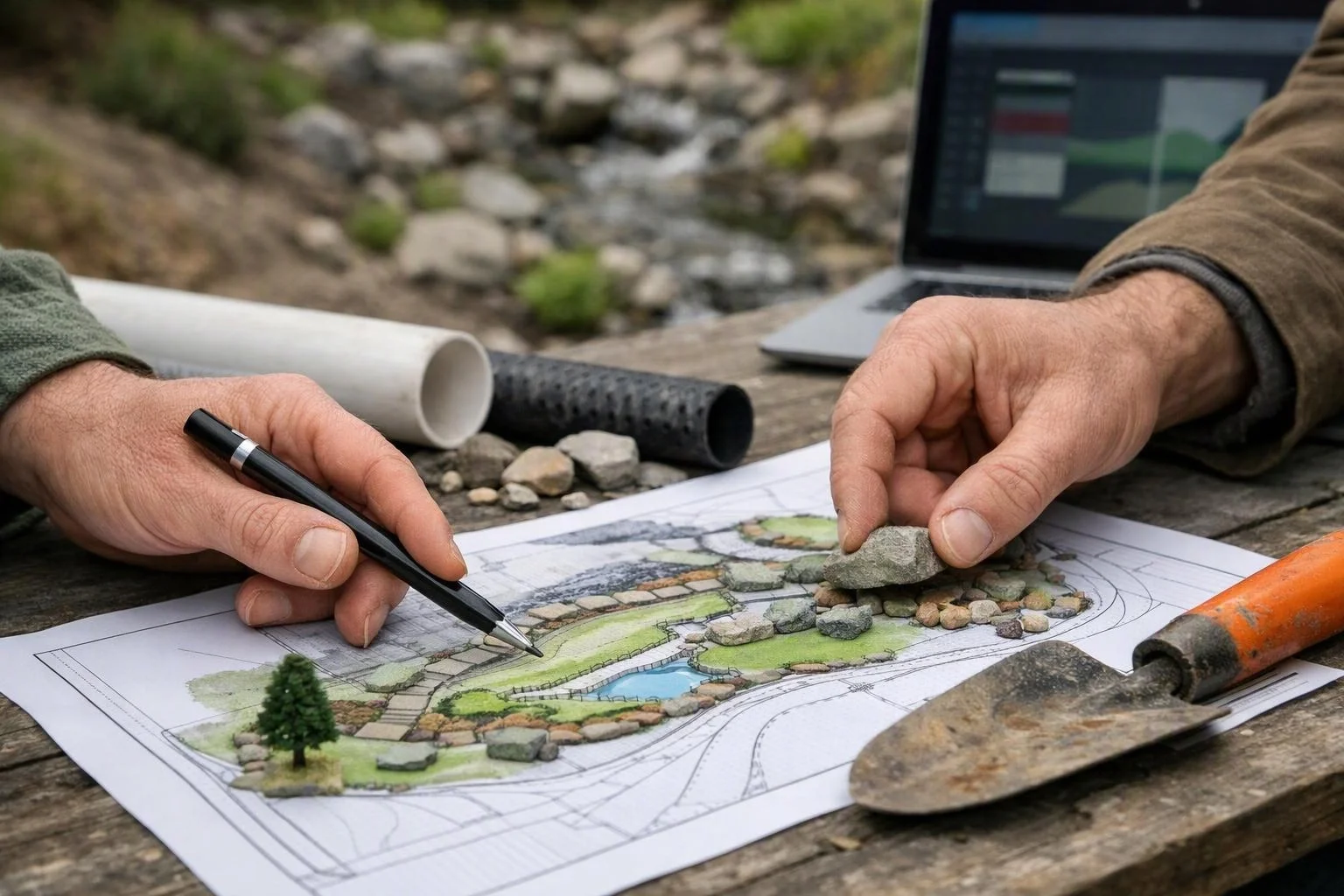
Our landscape design plan connects each level, drainage feature, and planting area. That approach helps the finished yard work as one system.
How Do You Plan a Landscape for a Wet Yard?
A wet-yard plan identifies the water source first, then directs, stores, filters, or absorbs water with suitable site features and plants.
A wet area may result from surface runoff, groundwater, a downspout, poor drainage, or compacted soil. Our team traces the water flow before choosing a solution.
A rain garden can hold and filter stormwater in a planted area. A swale can guide surface water, while a French drain can collect water below the surface.
Downspout drainage should carry roof water toward a suitable outlet or absorption area. Moisture-tolerant plants can support the design when the planting bed stays damp.
Which Drainage Solutions Fit Different Yard Problems?
The right drainage solution depends on where water travels, how much soil holds it, and where the water can safely go.
Our drainage layout matches the feature to the problem, site grade, soil condition, and planned landscape use.
| Yard problem | Possible solution | How it helps |
|---|---|---|
| Water crossing the surface | Swale | Guides surface water through a planned route |
| Water collecting at a low point | Catch basin | Collects surface water before it spreads |
| Wet soil below the surface | French drain | Moves subsurface water through a designed path |
| Runoff crossing a walkway or patio | Channel drain | Intercepts water along a hard surface |
| Roof water near the house | Downspout extension | Carries roof runoff away from vulnerable areas |
| Runoff needing planted treatment | Rain garden | Holds and filters water through suitable planting |
How Do Grading and Drainage Affect Landscape Design?
Grading and drainage shape where water goes, which areas can be planted, and how hardscape and structures can be placed safely.
Our team plans positive drainage away from vulnerable structures and connects each runoff path to a suitable outlet. The finished grade must work with the planting bed, lawn, patio, and nearby surfaces.
Good planning supports foundation protection and reduces the chance that water will move toward a neighboring property. It also helps hardscape surfaces shed water without creating new erosion.
We coordinate grading and landscape design through one plan. Our Landscape Design service can bring these decisions together before installation begins.
What Landscape Solutions Help Reduce Erosion on a Slope?
Erosion is reduced by slowing runoff, keeping soil covered, strengthening planting areas, and supporting unstable grade changes.
Our plant selection considers soil moisture, sun exposure, slope stability, and maintenance. We don't treat planting as a separate fix from water management.
When Does a Sloped or Wet Yard Need a Retaining Wall?
A retaining wall is useful when a grade change needs support, usable space, or controlled soil movement.
Our team considers soil pressure, wall drainage, footing conditions, and slope stabilization before selecting a wall design. These details help the wall manage water and soil forces together.
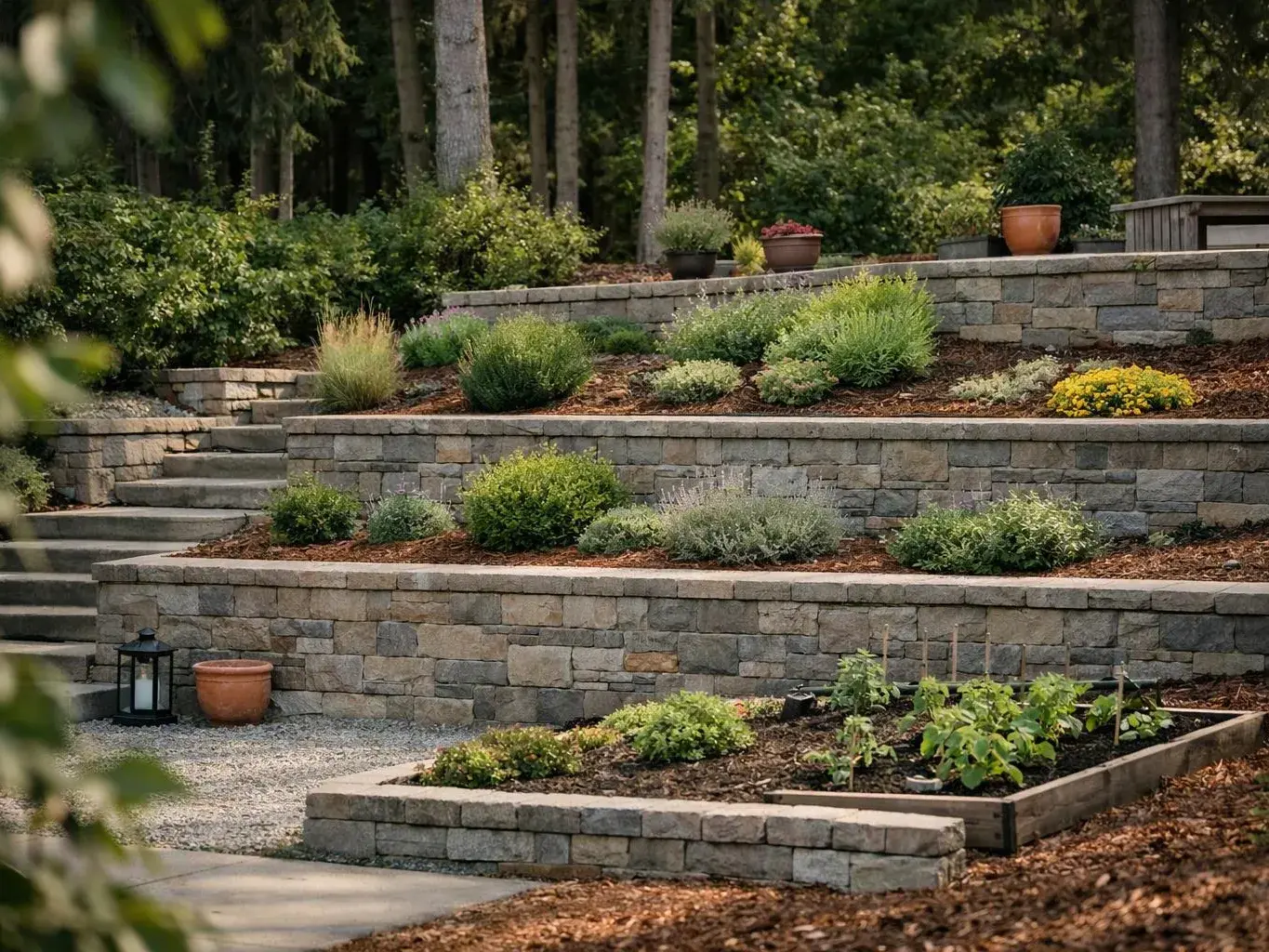
A terraced yard may use several supported levels to create planting or living areas. Wall materials should suit the landscape plan, site conditions, and intended appearance.
Structural retaining walls may require design review, permits, or inspections under local rules. We identify those requirements during planning and follow the applicable code process.
What Does a Complete Landscape Design Plan Include?
A complete landscape design plan shows how the yard will handle water, soil movement, planting, access, and outdoor use.
We use the plan to connect design choices before work begins. That reduces conflicts between drainage, planting, hardscape, and structural elements.
How We Turn Drainage Challenges Into a Workable Yard Plan
We turn drainage challenges into a workable yard plan by linking site conditions, water movement, grading, planting, and construction choices.
We explain how each option affects the rest of the yard. Our team also checks whether permits or inspections apply to structural or drainage work.
What Changes the Cost of a Sloped or Wet-Yard Project?
Project cost changes with the slope, water problem, soil condition, access, materials, and amount of grading or structural work.
Slope severity affects excavation, terracing, access, and erosion control. Soil condition affects how the site can be graded and whether drainage features need added preparation.
The water source influences the drainage materials and layout. Planting area, retaining wall design, hardscape, site access, and grading scope also change the work involved.
Our quote preparation connects the proposed solution to the actual site. Requesting a quote gives us the information needed to explain the included grading, drainage, planting, and structural scope.
What Warning Signs Show That Drainage or Erosion Needs Attention?
Drainage or erosion needs attention when water, soil, walls, or foundations show signs of movement or repeated moisture.
These signs can grow worse when runoff keeps using the same path. Our team can review the cause and connect the repair plan to the wider landscape design.
Questions About Sloped and Wet-Yard Landscape Design
Can landscaping fix a yard that holds water?
Yes, landscaping can fix water retention when the plan addresses the actual water source and drainage path. Our team may combine grading, collection, filtration, soil improvement, and moisture-tolerant planting.
What plants are suitable for a wet sloped yard?
Water-tolerant plants, deep-rooted plants, and ground cover can suit a wet sloped yard when they match the light and soil conditions. Our plant selection also considers erosion control and the maintenance the site can support.
Should drainage be installed before landscaping?
Yes, drainage should be planned before final landscaping because grading and water flow affect planting, lawns, patios, and walls. Our team coordinates yard drainage with the complete landscape plan.
How can I stop mulch and soil from washing down a slope?
Mulch and soil stay in place when runoff is slowed, bare areas are covered, and grade changes receive proper support. Our team may use ground cover, erosion-control materials, terraces, runoff diversion, or a retaining wall based on site conditions.
Can a retaining wall solve a drainage problem?
A retaining wall can help manage a drainage problem when its wall drainage, footing, grading, and runoff path are designed together. A wall alone won't correct water that has no safe outlet.
What should I do if water flows toward my house?
Water flowing toward a house needs prompt site assessment because the finished grade, downspout drainage, soil, and foundation area may all affect the risk. Our team can review the water flow and develop a drainage path that protects the foundation.
Written by Adam Gorski.
We can review your slope, wet area, grading, drainage, planting, and retaining wall needs in one plan.
Request a landscape design quote
Get a Free EstimateRelated Resources
Landscape Architect, Designer, or Design-Build Contractor: Which Should You Hire?
Compared ToLandscape Design Only or Design-Build: Which Route Fits Your Project?
Compared ToFrench Drains, Regrading, and Other Yard Drainage Options
How to HireHow to Choose a Landscape Contractor for Your Project