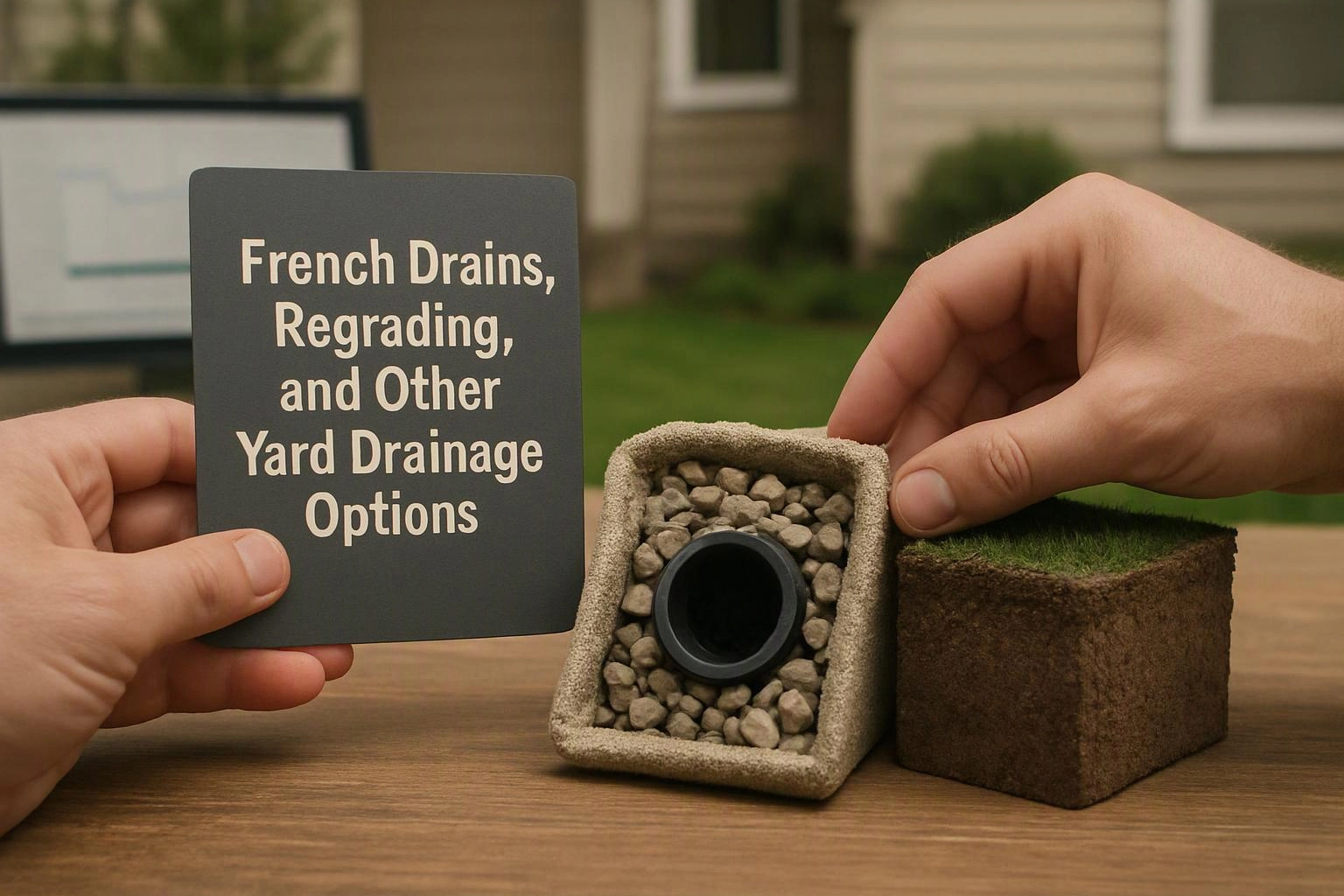
French Drains, Regrading, and Other Yard Drainage Options
French drains suit groundwater and buried flow problems, while regrading suits surface runoff caused by poor slopes. At LandscaperMaplevalleywa.com, we check the water source, soil, slope, and discharge path before recommending the right yard drainage option. The best choice depends on site fit, installation needs, maintenance, and erosion control.
Written by Adam Gorski · 29 years of local experience
Request an EstimateFrench Drain or Regrading: Which Solves the Problem?
French drains manage water below or beside the soil, while regrading changes the surface slope to move runoff away. French drain installation fits subsurface water, groundwater, and buried flow problems.
Land grading fits surface runoff caused by a poor soil slope or low spots. Our team looks at where water starts, how it moves, and where it can safely leave the property.
Good yard drainage may use one method or combine collection with grading. We also check whether the plan could reduce standing water, soil erosion, or pressure near a foundation.
French Drain vs. Regrading at a Glance
French drains address buried water paths, while land grading redirects water across the surface. The work plan depends on access, soil, slope, and the drainage outlet.
| Factor | French Drain | Regrading | Site Fit |
|---|---|---|---|
| Best use | Subsurface water and buried flow | Surface runoff and low areas | Water source decides the method |
| Cost drivers | Trench length, excavation, pipe, outlet, and restoration | Soil movement, slope correction, access, and restoration | More excavation or restoration can raise the work scope |
| Timeline drivers | Trench access, soil condition, outlet design, and surface repair | Amount of grading, soil condition, and planting or lawn repair | Weather and site access can affect the work plan |
| Maintenance | Keep inlets and the outlet clear | Watch for settling, new low spots, and erosion | Maintenance access should be part of the design |
What a French Drain Does Well
A French drain is a drainage trench that collects water through gravel and a perforated drain pipe. Filter fabric helps separate soil from the drainage materials, which can help protect the flow path from soil movement.
Water enters the trench and travels toward a planned drainage outlet. The outlet may direct water toward an approved discharge area, depending on the site and local requirements.
Our French Drain Installation service starts with the water source and ends with a discharge plan. We also consider foundation drainage, soil absorption, and maintenance access.
French Drain Advantages and Best-Fit Conditions
A French drain fits sites where water travels through soil or collects along a buried edge. The trench must have a workable route and a safe outlet.
Best for: French drains are best for subsurface water, buried flow, and drainage beside foundations or wet areas.
What Regrading Does Well
Land grading changes the soil slope so surface runoff moves toward a planned drainage route. Regrading can reshape low spots, build shallow swales, and reduce water pooling.
Our team studies how stormwater crosses the yard before moving soil. We look for soil settling, concentrated flow, and signs that runoff is cutting channels into the lawn.
Surface grading can support erosion control when the new slope spreads or guides water. The finished plan may also include a swale, surface drain, or downspout drainage.
Regrading Advantages and Best-Fit Conditions
Regrading fits yards where surface drainage fails because soil does not guide water toward a safe outlet. The work depends on the existing yard slope and available space.
Best for: Land grading is best for surface runoff, poor yard drainage, low spots, and visible flow across the lawn.
When Another Yard Drainage Option Fits Better
Catch basins, surface drains, dry wells, swales, and downspout drainage fit when water collects at a surface inlet, follows a downspout, or needs a designed outlet.
A catch basin can collect water at a low surface point. A surface drain can intercept runoff across a paved or planted area.
A dry well may fit when site conditions allow water to disperse below ground. A swale can guide shallow surface flow, while downspout drainage can move roof water away from problem areas.
Each option needs a planned discharge location. We check soil absorption, nearby structures, erosion risk, and maintenance access before selecting a system.
What Changes the Cost and Work Plan?
Drainage cost depends on the water source, excavation, soil, slope changes, outlet design, access, and surface restoration.
Trench length affects the amount of excavation, pipe, gravel, and filter fabric. Difficult soil or limited access can change the equipment and labor plan.
Slope correction may require moving more soil and restoring more lawn or planting areas. A drainage outlet also needs careful design so it does not shift water problems to another part of the property.
Our quote explains the project scope, selected drainage method, excavation needs, outlet plan, and landscape restoration. Request a quote through our contact page so we can review the site conditions.
How We Assess a Yard Drainage Problem
Our site inspection follows the water flow from its source to its current discharge point. We use that review to match the system to the actual yard problem.
Questions to Ask Before Choosing a Drainage System
The right drainage assessment should explain the water source and the proposed discharge location. Ask how the method addresses the problem you can see and the cause beneath it.
Ask what maintenance access the design provides. Ask how the plan handles erosion control, downspout discharge, and landscape restoration.
Also ask what the project scope includes. Clear answers should cover excavation, drainage materials, outlet work, surface repair, and any required inspection or code review.
How to Request a Yard Drainage Quote
Request a yard drainage quote by sharing the drainage problem, affected areas, visible water paths, and access conditions so we can assess the work plan.
Choose the Drainage Method That Matches the Water
French drains fit subsurface water, while land grading fits surface runoff caused by a poor soil slope. Catch basins, swales, and downspout drains fit focused collection points.
Our team matches the drainage system to the water source, soil, slope, outlet, and maintenance needs. A combined plan can use grading, collection, and erosion control when one method cannot manage the full flow.
Questions About French Drains and Yard Grading
Can regrading and a French drain be used together?
Yes, regrading and a French drain can work together when surface runoff and subsurface water affect the same area. Grading guides surface flow, while the drain collects water below the soil.
Where should a French drain discharge water?
A French drain should discharge at a planned location that does not create new pooling, erosion, or drainage problems. We review the outlet, soil absorption, nearby structures, and site requirements before choosing the route.
Does a French drain require regular maintenance?
Yes, a French drain needs maintenance access so inlets and the drainage outlet can be checked and cleared. Leaves, soil movement, and outlet blockage can reduce drainage performance.
What signs show that yard drainage is causing erosion?
Yard drainage may be causing erosion when runoff leaves bare soil, channels, exposed roots, displaced mulch, or sediment deposits. Our team traces the water flow and checks whether grading or collection should change.
Can downspouts cause the same drainage problems as poor grading?
Yes, downspouts can create pooling and erosion when their discharge concentrates water near a building or low area. Downspout drainage may need a planned outlet, surface route, or connection to a larger yard drainage system.
Author: Adam Gorski