Warning Signs Your Retaining Wall Needs Attention
Signs of retaining wall failure include leaning, bulging, widening cracks, shifting blocks, soil separation, and water collecting behind the wall. LandscaperMaplevalleywa.com checks the wall, drainage, soil pressure, and surrounding grade to identify the safest next step.
Written by Adam Gorski · 29 years of local experience
Request an EstimateWritten by Adam Gorski.
What Are the Warning Signs of Retaining Wall Failure?
Retaining wall failure often begins with movement, cracking, drainage changes, or soil loss behind the wall. Early signs can point to pressure building before a larger section gives way.
Why Is Your Retaining Wall Leaning or Bulging?
A retaining wall leans or bulges when soil pressure becomes greater than the wall and drainage system can resist. The force usually comes from lateral soil pressure behind the wall.
Saturated soil weighs more and pushes harder against the wall. Poor drainage can trap that water and create hydrostatic pressure. Frost movement, soil settlement, or a weak wall footing can also cause wall movement.
Our team checks the wall alignment, base, soil condition, and drainage paths. We look for the cause of movement before recommending repair or replacement.
What Do Cracks in a Retaining Wall Mean?
Cracks in a retaining wall can show settlement, shifting, water pressure, or movement between wall sections. Crack location and direction help explain what the wall is experiencing.
Horizontal cracks may reflect pressure pushing through the wall. Vertical cracks can relate to settlement or movement between sections. Masonry cracks, concrete cracks, and joint separation each need a careful review.
Our crew checks whether cracks are isolated or connected to broader structural movement. We also inspect nearby soil and drainage before choosing a wall repair plan.
Why Is Soil Separating Behind the Retaining Wall?
Soil separates behind a retaining wall when water, settlement, or wall movement creates gaps in the backfill. These voids can grow as surface runoff enters the space.
Backfill may settle after water moves through it. Soil erosion can also carry fine material away through gaps or weak drainage outlets. A shifting wall can pull away from stable soil and leave a visible separation line.
We inspect the gap, backfill, wall movement, and nearby runoff paths. Our team may also review the related signs described in “How to Recognize Erosion Problems on a Sloped Yard” when slope erosion affects the wall.
What Causes Water to Collect Near a Retaining Wall?
Water collects near a retaining wall when runoff, blocked drains, or poor grading prevents water from leaving the wall area. Standing water near the wall can increase pressure on the structure.
Surface drainage carries water across the ground toward the wall. Subsurface drainage moves water through drainage gravel and a perforated drain pipe. Blocked outlets, buried weep holes, or damaged pipe can stop that flow.
Downspouts that discharge near the wall can add more water to the same area. We check grading, drain outlets, drainage gravel, and signs of hydrostatic pressure before recommending yard drainage work.
When Should You Stop Watching the Wall and Request an Inspection?
Request an inspection when the wall moves, cracks expand, soil escapes, or water pressure keeps increasing. These signs can create a safety risk for people, landscaping, and nearby structures.
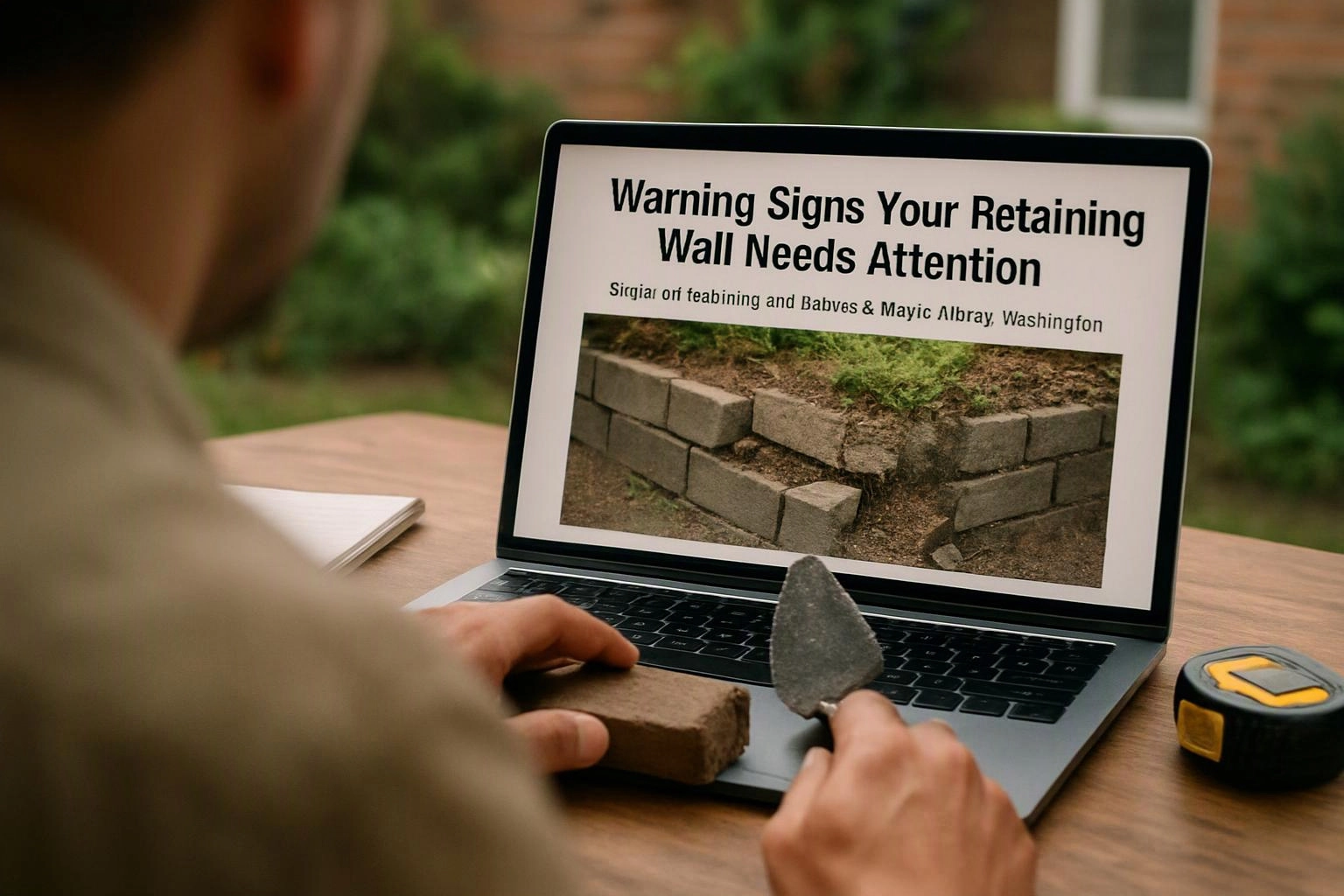
Do not climb, brace, or dismantle an unstable wall yourself. You can document visible changes from a safe location, while our team checks the structure and surrounding ground.
What We Check Before Recommending Retaining Wall Work
We check the wall, soil, drainage, grade, and nearby erosion before recommending repair, replacement, or related erosion control work. This review connects visible damage with the conditions causing it.
Our team reviews wall alignment, the wall base, backfill, drainage outlets, and site grading. We also look for saturated soil, settlement, blocked outlets, and erosion near the footing.
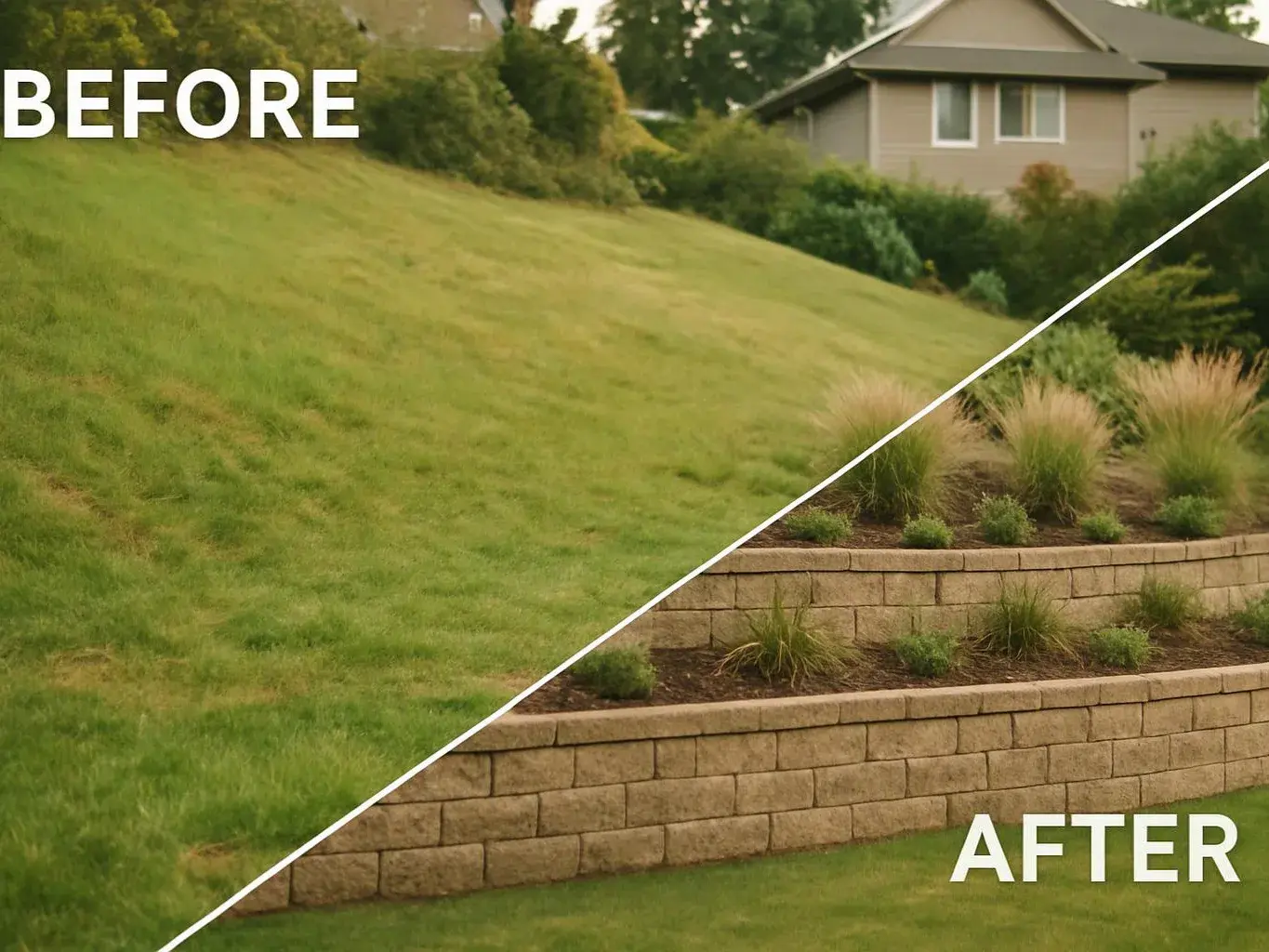
When a wall needs broader work, we connect the findings to a suitable Retaining Wall Installation plan. The plan may include drainage improvements, erosion control, repair, or replacement.
DIY Checks vs Calling LandscaperMaplevalleywa.com
You can document visible changes safely, while our team evaluates movement, drainage, soil pressure, and repair needs. Simple observations help us understand when the problem first appeared.
Leave structural work, excavation, and unstable wall access to our crew. The comparison below shows where safe observation ends and site inspection begins.
| Factor | What you can do yourself | What we do |
|---|---|---|
| Visual inspection | Photograph leaning, bulging, cracks, gaps, and standing water from a safe location. | We assess wall alignment, movement patterns, blocks, capstones, and the wall base. |
| Drainage clearing | Keep visible surface outlets clear when they can be reached safely from the ground. | We inspect downspouts, drain outlets, weep holes, pipe paths, and drainage gravel. |
| Retaining wall repair | Avoid removing blocks, adding braces, or digging beside a moving wall. | We identify the cause and prepare a repair plan suited to the wall condition. |
| Retaining wall replacement | Record nearby structures, grade changes, and areas where soil is washing out. | We review access, soil pressure, drainage, materials, removal needs, and the replacement plan. |
| Erosion control and yard drainage | Note where runoff starts, collects, or carries soil toward the wall. | We connect runoff patterns with grading, erosion control, and drainage improvements. |
How We Plan the Right Retaining Wall Solution
A sound retaining wall plan starts with a site review and matches the work to the cause of failure. We separate visible symptoms from the soil and drainage conditions behind them.
Our team explains the work before starting so you can understand the scope. We also identify access limits and drainage details that can affect installation.
What Changes the Cost of Retaining Wall Work?
Retaining wall work costs vary with wall condition, access, materials, drainage needs, soil pressure, and the required repair or replacement work. Each factor changes the labor, equipment, and preparation involved.
Wall size and access affect removal and installation needs. Drainage work can include outlets, pipe paths, gravel, grading, or downspout changes. Demolition and erosion control may also be needed when the wall base has lost soil.
Material selection affects the design and installation process. We review these conditions during the site inspection and explain what our quote includes before work begins.
To request an exact quote, contact our team through our contact page. We can then review the wall, drainage, soil pressure, access, and requested solution.
Questions About Retaining Wall Warning Signs
Can a leaning retaining wall be repaired?
Yes, a leaning retaining wall can be repaired when the wall condition, soil pressure, and drainage system support repair. We inspect the footing, backfill, movement, and drainage before choosing repair or replacement.
Should I replace a retaining wall with large cracks?
Not always, because large cracks can come from different causes and wall conditions. We inspect the crack pattern, wall movement, footing, soil pressure, and drainage before recommending repair or replacement.
Can poor drainage cause retaining wall failure?
Yes, poor drainage can cause retaining wall failure by trapping water behind the wall and increasing hydrostatic pressure. We check surface drainage, subsurface drainage, drain outlets, downspouts, and grading.
What should I do if soil is washing out behind my retaining wall?
Keep people away from an unstable area and request an inspection if soil loss continues. We check runoff, backfill, wall movement, erosion, and drainage before planning erosion control or wall work.