What to Check When Water Collects Around Your Patio
Check the water source, patio slope, paver joints, soil edges, nearby downspouts, and drainage outlets. LandscaperMaplevalleywa.com uses these observations to identify whether grading, drainage, or patio construction needs attention. Author: Adam Gorski.
Written by Adam Gorski · 29 years of local experience
Request an EstimateWhat Should You Check When Water Collects Around a Patio?
Patio water pooling should be checked at the source, flow path, low points, edges, joints, and drainage outlets.
Patio drainage problems often show through standing water, soft soil, staining, or moving pavers. We trace the runoff path so the visible puddle isn't mistaken for the true cause.
Check whether water comes from the roof, yard, nearby hard surfaces, or the patio itself. Note where water slows, changes direction, or leaves the area.
Before You Inspect the Patio
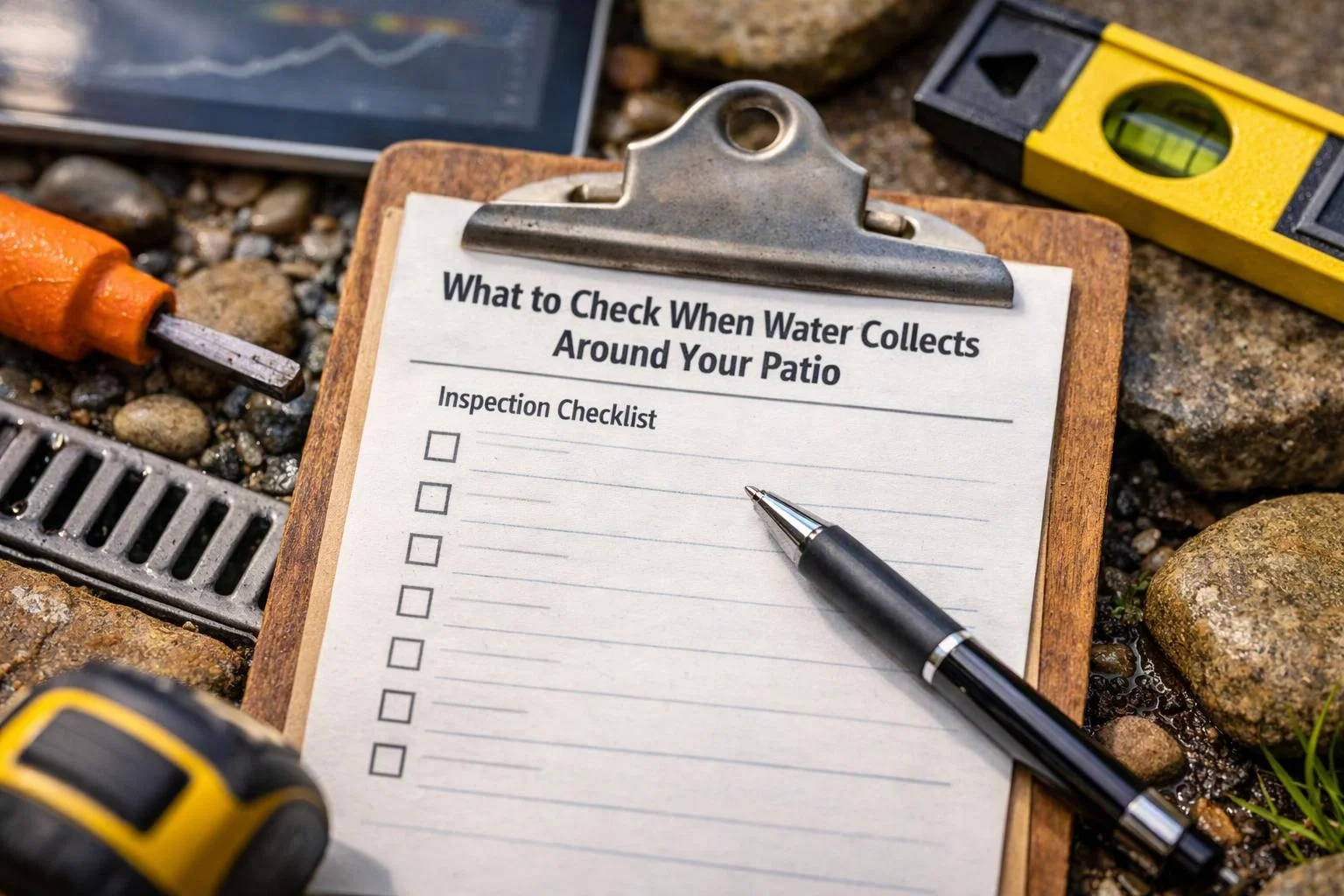
Before inspecting a patio, record the weather, water source, property slope, and visible perimeter changes.
Use safe ground-level observations and keep clear of unstable edges. Our team can complete the detailed inspection when access, drainage components, or construction conditions need closer review.
How Can You Identify the Source of Patio Drainage Problems?
You can identify the source by tracing water from roofs, yards, hard surfaces, and low areas toward the patio.
Start at the highest nearby area and follow the drainage path downhill. Compare the flow with the patio slope, then look for a low spot where water gathers.
Roof drainage can overload one patio edge when a downspout sends concentrated water toward the surface. Yard grading can create the same problem when broad surface runoff reaches the patio without a clear outlet.
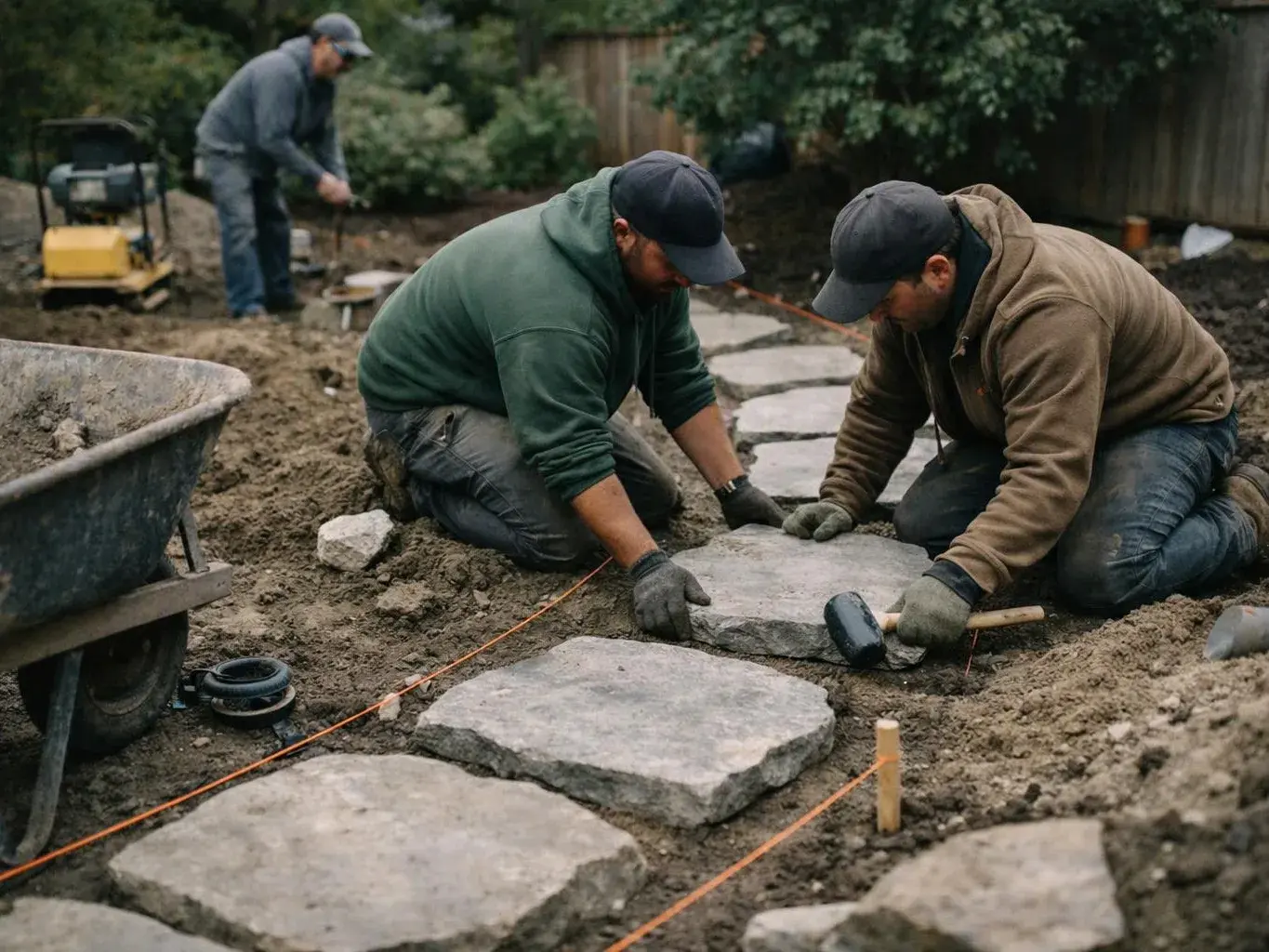
For a new or changing paver patio installation, we also check the base layer, joint condition, edge restraint, and finished surface slope.
Compare the Signs You Find Around the Patio
Each patio drainage sign points toward a different part of the water system.
Use the comparison below to connect what you see with the next inspection question. A single sign may have more than one cause, so we review the full runoff path.
| Sign | What to check | Possible direction |
|---|---|---|
| Standing water | Low points, surface slope, and slow outlets | Surface drainage or grading review |
| Soil erosion | Concentrated runoff and exposed patio edges | Runoff control or edge repair |
| Uneven pavers | Base movement, joint loss, and water beneath the surface | Paver construction or settlement review |
| Open paver joints | Joint erosion and fast-moving surface water | Joint repair and drainage review |
| Downspout discharge | Outlet location, soil impact, and flow direction | Roof drainage adjustment |
| Blocked drain | Debris, sediment, and water backing up | Drainage inlet or outlet service |
What Should You Check While Water Is Moving?
While water is moving, check the flow direction, patio slope, paver surface, soil edges, and drainage inlets.
Moving water reveals patterns that disappear after the surface dries. Watch from a safe location and avoid walking on soft soil or unstable pavers.
What Are the Red Flags Around a Patio?
Red flags include repeated pooling, active soil washout, settled pavers, and water against structures.
These signs suggest that water is affecting the patio system or nearby ground. Our team reviews the source and the full drainage path before defining the repair scope.
Why Is Soil Washing Out Around the Patio?
Soil washes out around a patio when concentrated runoff travels through weak edges, open joints, or poorly graded ground.
Soil erosion often begins where downspout discharge or yard grading focuses water in one place. Water can then carry soil through open joints or beneath an unprotected patio edge.
An edge restraint helps hold pavers in place, but it can't correct a drainage outlet that sends strong flow beside the patio. We check the edge, base layer, joint condition, and surrounding yard grading together.
After the Water Drains, Document What Changed
After water drains, document the patio photographs, water marks, paver movement, soil loss, and drainage observations.
A clear record helps connect surface changes with the earlier water flow. It also gives our team useful information for repair planning and site review.
When Does a Patio Drainage Inspection Need Site Planning?
A patio drainage inspection needs site planning when water crosses several areas, shifts pavers, erodes soil, or has no clear outlet.
Land grading, yard drainage, and surface drainage can affect one another across the property. We map the runoff path before choosing a drainage repair scope.
Some sites need a surface solution, such as a channel drain or catch basin. Other sites may need subsurface drainage, outlet work, or changes to the patio edge and surrounding grade.
Our team can review these conditions and explain what the proposed work includes. Requesting a quote gives us the details needed to assess access, materials, drainage components, and patio construction changes.
Request a patio drainage inspection
Get a Free EstimateQuestions About Patio Water Pooling
Can standing water make patio pavers move?
Yes, standing water can contribute to moving patio pavers when it weakens soil, carries away joint material, or affects the base layer. We check the paver surface and the drainage path together.
What does water pooling beside a patio indicate?
Water pooling beside a patio indicates a low spot, limited outlet, concentrated runoff, or a grading concern. The location of the puddle helps show where we should trace the water next.
Should patio drainage be checked after heavy rain?
Yes, patio drainage should be checked after heavy rain because active water flow makes the source and runoff direction easier to see. Stay clear of soft ground and unstable pavers while observing conditions.
How do you document patio water pooling for an inspection?
Document patio water pooling with photographs, water marks, flow direction, low spots, soil loss, paver movement, and drainage outlet conditions. We use those observations to connect visible damage with grading, drainage, or patio construction.