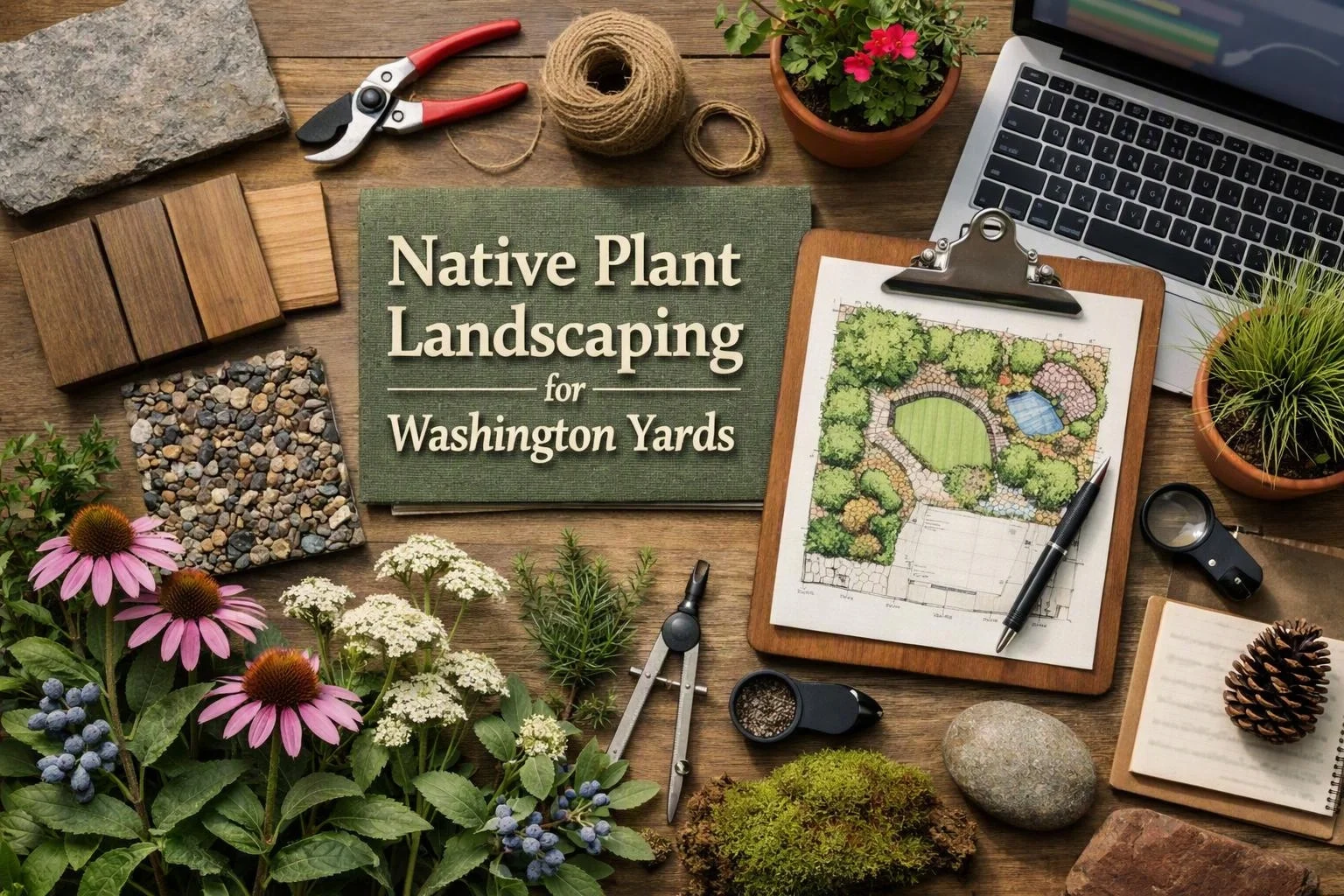
Native Plant Landscaping for Washington Yards
Native plant landscaping uses plants adapted to Washington conditions, which can support local wildlife, improve stormwater handling, and reduce landscape stress. LandscaperMaplevalleywa.com helps plan plant selections, lawn transitions, garden layouts, and tree planting around each yard’s conditions.
Written by Adam Gorski · 29 years of local experience
Request an EstimateWhat Is Native Plant Landscaping?
Native plant landscaping is a landscape design approach that uses plants adapted to the local region and places them according to soil, light, moisture, and space.
Native plants can make a yard feel connected to its setting. Good garden design also considers paths, views, play areas, drainage, and how much care the landscape needs.
Our team reviews Washington yards as complete systems. We match the plant palette to site conditions so each garden bed has a clear purpose and a practical care plan.
Written by Adam Gorski.
What Benefits Can Native Plants Bring to Washington Yards?
Native plants can support pollinators, provide habitat, handle local weather patterns, and help yards manage rainwater. Their value depends on the right plant choices and placement.
We use native planting to solve practical landscape needs while improving the character of the yard.
How Do We Choose Native Plants for Your Yard?
We choose native plants by matching each plant’s needs with your yard’s light, soil, drainage, available space, and maintenance goals.
Our team starts with a site assessment. We study sun exposure, soil texture, moisture, drainage paths, and existing trees before building a plant selection plan.
Mature plant size matters because crowded beds can become harder to maintain. We also consider bloom period, seasonal structure, water needs, and whether evergreen plants can add lasting cover.
Our landscape designer services connect plant selection with paths, garden beds, tree canopy, and the way you use the property.
Which Plant Traits Matter During Design?
Plant traits help us build a balanced design that works across seasons. The best plant palette combines beauty, habitat value, and manageable care.
| Trait | Why It Matters |
|---|---|
| Plant habit | Shows whether a plant grows upright, spreading, clumping, or trailing. |
| Bloom period | Helps provide color and food across different parts of the growing season. |
| Root system | Affects soil stability, water movement, and plant establishment. |
| Wildlife value | Shows how a plant can support insects, birds, or other wildlife. |
| Water needs | Helps place plants in areas that stay dry, moist, or seasonally wet. |
| Evergreen plants | Can provide structure and cover when deciduous plants lose their leaves. |
Can You Replace Part of a Lawn With Native Plants?
Yes, you can replace part of a lawn with native plants when the design matches the site and leaves clear access for use and care.
Our team can plan a lawn conversion around how you use the yard. Some areas may suit ground cover, while others may work better as garden beds or a native meadow planting.
Edging gives the new planting a clean boundary. Soil preparation also matters because compacted or depleted soil can slow plant establishment.
A partial lawn replacement can keep useful open space while adding habitat, seasonal interest, and better water handling.
How Do Native Plants Help Pollinators and Stormwater?
Native plants help pollinators through flowers and habitat, while their roots can slow, spread, and absorb rainwater.
Flowers provide food for insects during active growing periods. Dense planting also gives birds and insects places to shelter.
Root systems create pathways through the soil. Those pathways can improve infiltration, reduce rainwater runoff, and support erosion control on sloped or exposed ground.
Our team can combine habitat planting with a rain garden or other stormwater feature when the site has suitable drainage and space.
How Does Native Plant Landscaping Compare With Common Yard Options?
Native planting, traditional lawn, ornamental planting, and mixed landscapes each fit different yard goals. The right choice depends on water needs, wildlife value, use, and maintenance preferences.
Our team often combines approaches so the landscape works for both people and plants.
| Yard option | Best fit | Water and wildlife considerations | Maintenance considerations |
|---|---|---|---|
| Native planting | Habitat, natural character, and site-based design | Can support wildlife and suit local moisture patterns | Needs thoughtful establishment and seasonal care |
| Traditional lawn | Open play areas and simple visual space | Usually offers less habitat than a layered planting design | Requires regular mowing and edge care |
| Ornamental planting | Specific colors, forms, or formal garden themes | Water needs and wildlife value vary by plant choice | May need closer pruning and seasonal replacement |
| Mixed landscape | Yards that need both usable space and habitat | Can balance lawn, native beds, trees, and water-wise planting | Care depends on the mix and how each area is used |
What Does Our Native Plant Landscaping Process Include?
Our native plant landscaping process connects site review, garden design, plant selection, and installation planning.
We explain the purpose of each planting area so the finished yard remains practical to use and maintain.
We review the planned work with you before installation begins. You can request a quote through our contact page.
What Changes the Cost of a Native Plant Landscaping Project?
Native plant landscaping cost depends on the planting area, site preparation, plant types, tree work, access, and requested design details. We review those factors and prepare a quote for the planned work.
Project scope affects the amount of design and installation work involved. Lawn removal, soil preparation, irrigation changes, tree planting, and difficult access can also change the work plan.
Plant quantity and mature size influence the plant palette. Garden design details, drainage features, edging, mulch, and ongoing landscape maintenance planning add further project decisions.
Our quote explains the planned work so you can understand what the project includes before approving it.
How Can You Prepare for a Native Plant Landscaping Consultation?
A clear list of goals helps us design a native garden that fits your property and daily life. Photos, sketches, and notes about problem areas can make the site review more useful.
Bring the following details to the consultation:
Questions About Choosing Native Plants
Are all plants sold at Washington nurseries native plants?
Plants sold at Washington nurseries can include native, regional, and introduced species. Check the plant’s regional origin and growing needs before adding it to your garden design.
Can native plants grow in shaded parts of a yard?
Yes, native plants can grow in shaded parts of a yard when their light and moisture needs match the site. We select shade-tolerant plants and account for tree roots, soil conditions, and seasonal light changes.
Do native plants still need watering after installation?
Yes, native plants still need watering during plant establishment and during stressful dry conditions. Watering needs depend on the plant, soil, exposure, season, and drainage.
What should you consider before adding native trees to a yard?
Native tree planting should account for mature size, root growth, soil, drainage, overhead space, views, and nearby structures. We also consider how future shade will affect existing plants and usable areas.
Can native plant landscaping include evergreen plants?
Yes, native plant landscaping can include evergreen plants when their mature size, water needs, and site conditions fit the design. Evergreen structure can provide lasting screening, habitat, and visual interest.
Related Resources
Landscape Architect, Designer, or Design-Build Contractor: Which Should You Hire?
Compared ToLandscape Design Only or Design-Build: Which Route Fits Your Project?
Compared ToDrip Irrigation or Sprinklers: Choosing an Irrigation System
What It CostsLandscape Design Cost Factors and What to Include in Your Quote