Skip to content

Drip Irrigation Installation in Ames Lake

When shrub borders need replacement, we plan a new drip layout in Ames Lake. When they need adjustment, we tune coverage around established plants and roots.

5 · 36 Reviews29 Years in BusinessUpfront, Transparent PricingServing 89 Communities

Scope and Service Overview for Ames Lake

Drip Irrigation Installation in Ames Lake is provided by LandscaperMaplevalleywa.com for residential planting areas, including shrub borders, plant beds, container plants, and tree rings. Our coordinated design-to-build process evaluates site conditions before installation.

  • What we do: LandscaperMaplevalleywa.com provides Drip Irrigation Installation for Ames Lake, Washington homes and planted areas.
  • What is included: Site review, drip-line layout, emitter placement, planting-area coordination, and maintenance guidance.
  • What you get: The customer receives a planned irrigation layout that directs water to the intended planting areas.

Where is drip irrigation installation most useful in Ames Lake, Washington?

Shrub borders benefit most when plants need steady root-zone watering across a defined bed. Drip lines also suit plant beds, vegetable gardens, container plants, and tree rings. The best placement follows plant spacing, access, soil, slope, and drainage. A site review shows whether adjustment, replacement, or a different irrigation approach fits the property.
Our Track Record

Years in Business
29
Average Rating
5
Customer Reviews
36

Drip Irrigation Installation for Ames Lake Planting Areas

Drip irrigation installation suits planted areas where water needs to reach specific roots without wetting every surface. This page focuses on deciding where the system helps most, especially around shrub borders, plant beds, vegetable gardens, container plants, and tree rings.

Customers should first consider plant spacing, bed shape, slope, drainage, and access to the water supply. Our team uses those details to decide whether an existing layout needs adjustment or whether a new layout makes more sense.

The work is part of a broader landscape design and construction service. We also work with planting, patios, walkways, retaining walls, water features, lighting, and lawn installation when those elements affect the irrigation plan.

  • Check plant spacing and root-zone coverage.
  • Review soil, slope, drainage, and bed access.
  • Identify dry spots, blocked emitters, and uneven flow.
  • Decide whether the layout needs adjustment or replacement.
  • Plan access for future inspection and maintenance.
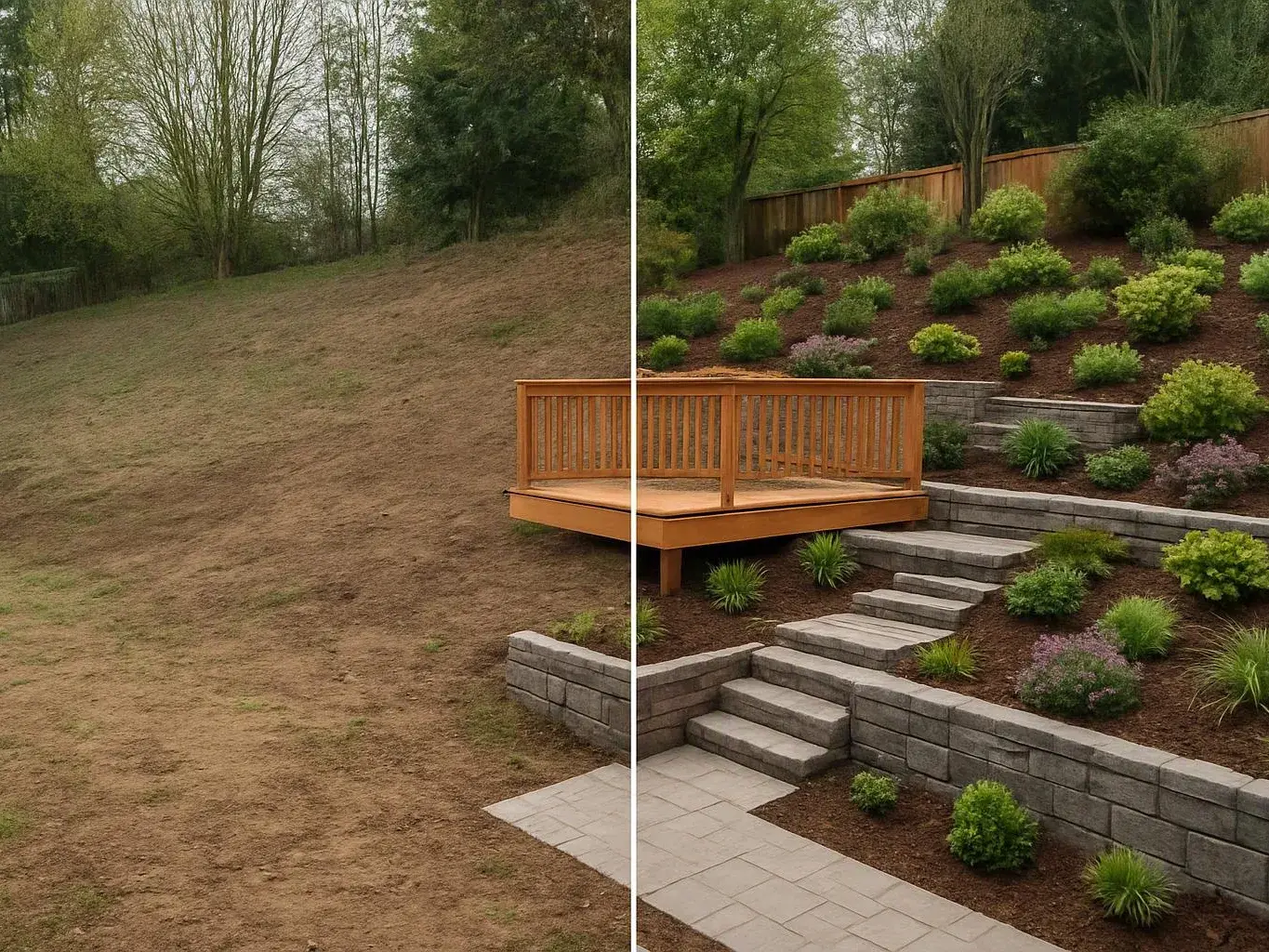
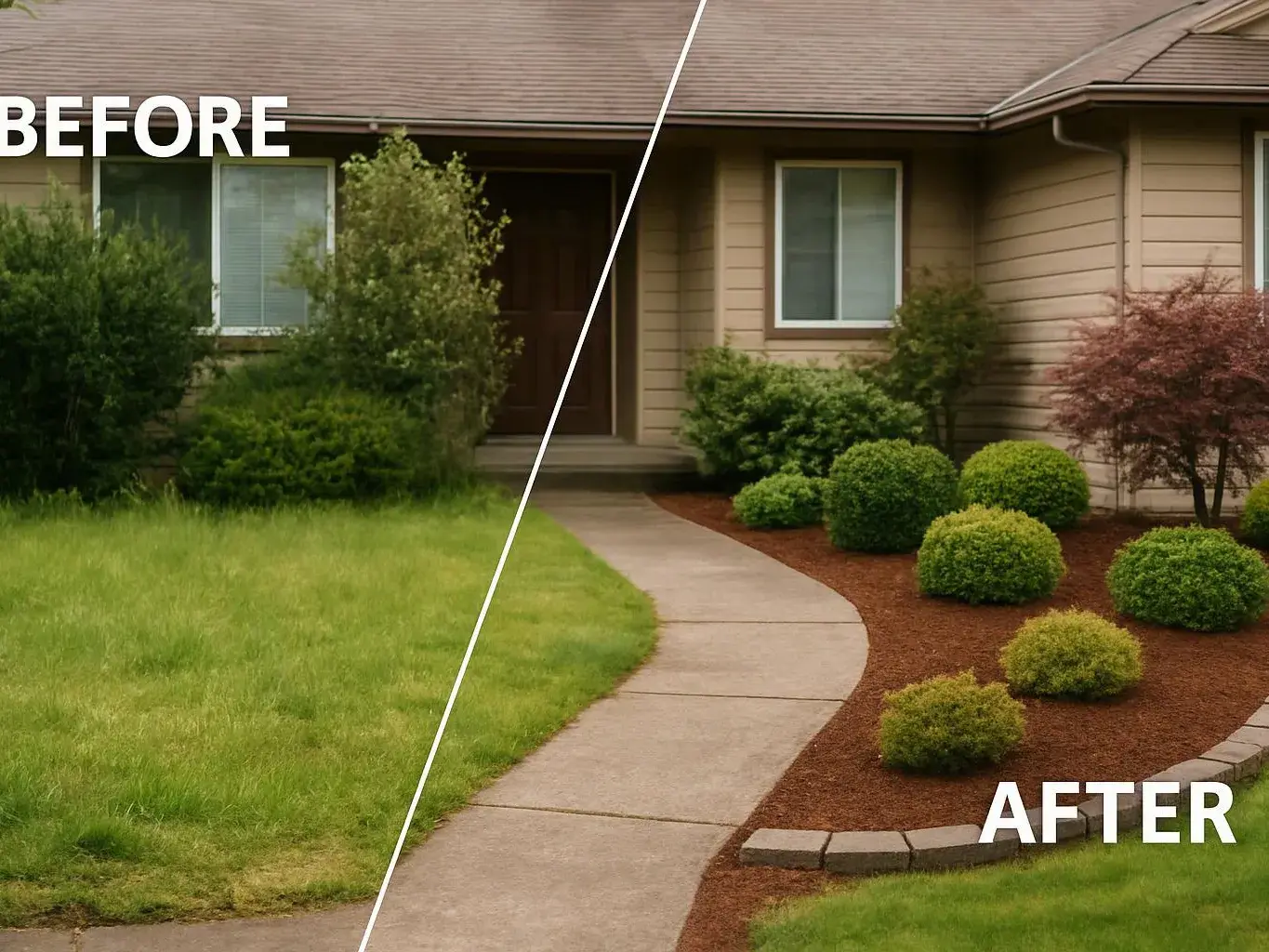
Split view of a house front yard before and after landscaping, with a curved walkway, trimmed shrubs, and lawn

Service Overview

Drip irrigation installation is a watering system setup that sends water through tubing and emitters to plant roots.

  • Drip irrigation differs from spray irrigation because it places water near the root zone instead of casting water across the whole area.
  • We provide this service for Ames Lake homes and planted areas throughout our King County coverage.

What Our Drip Irrigation Work Includes

LandscaperMaplevalleywa.com provides comprehensive Drip Irrigation Installation in Ames Lake. Here's what you get:

  • We assess the planting area before laying out drip tubing and emitters.
  • We plan water delivery around plant spacing and the shape of each bed.
  • We coordinate irrigation placement with planting, soil, drainage, and other landscape elements.
  • We install drip irrigation for plant beds, vegetable gardens, container plants, and tree rings.
  • We explain maintenance needs so customers can keep the system working as plants grow.

Why This Irrigation Approach Fits Some Properties

Match water to plant spacing

Plant spacing guides emitter placement and tubing paths. Customers with grouped plants often get a clearer layout than customers with scattered roots. The work is the wrong fit when the area needs broad spray coverage across open lawn.

Coordinate irrigation with design

Our landscape design background helps us place irrigation beside planting, paths, walls, and other built elements. Customers can discuss irrigation as part of a wider landscape plan.

Build around site conditions

We review soil, slope, and drainage before choosing the layout. Those checks help keep tubing accessible and reduce conflicts with other landscape work.

Plan for ongoing care

Drip systems need inspection as plants grow and emitters collect debris. We include maintenance guidance so customers know what to watch after installation.

Process

How We Plan and Install Drip Irrigation

1

Review the planting areas

We inspect the beds, containers, tree rings, soil, slope, drainage, and access before setting the irrigation scope.

2

Map the water path

We plan tubing routes and emitter positions around plant spacing, root zones, paths, walls, and other landscape features.

3

Set the installation scope

We explain whether the area needs a new layout, an adjustment, or a different irrigation approach.

4

Install the drip components

We place supply tubing, drip tubing, emitters, connectors, and end closures according to the approved layout.

5

Check coverage and explain care

We inspect the installed layout, discuss coverage, and explain the maintenance checks that help keep emitters working.

What Better Drip Coverage Changes

Drip irrigation places water near plant roots, which helps each planting area receive a more focused flow.

A planned layout makes dry spots easier to trace because tubing and emitters follow the bed design.

The system keeps irrigation work connected to planting, drainage, and future landscape maintenance.

Container plants can receive targeted watering without treating the entire surrounding surface.

Regular maintenance helps identify clogged emitters, shifted tubing, and changes caused by plant growth.

Choosing the Right Irrigation Scope

These options compare the main decisions we make during a drip irrigation assessment.

Irrigation scopeBest fitWhat we review
New drip layoutA new or redesigned planting areaPlant spacing, bed shape, water access, and tubing routes
Existing system adjustmentA system with usable parts and limited coverage issuesEmitter placement, blocked tubing, dry spots, and access
Different irrigation approachAn area that needs broad coverage or does not suit drip linesPlant type, open surface, water pattern, and landscape use

Our Standard

  • Professional Consultation Access
  • On-Site Consultation
  • Conscious Design Practices
  • Coordinated Project Services

Customer Reviews for Drip Irrigation Installation in Ames Lake

5(36 Customer Reviews)View our Google Business Profile
Jonathan Miller
Jonathan Miller
3 years ago
Verified on Google
I'm very happy with the work Adam has done for me. He was always on time and has terrific design sensibilities. Best of all he accurately incorporated my ideas into his design.
Garrett Richardson
Garrett Richardson
7 months ago
Verified on Google
Adam and his team did an amazing job designing our garden in NorthBend! He was very knowledgeable and helpful in finding the right plants to thrive in our particular environment. His team was courteous, friendly, and considerate. From the beginning we didn’t know exactly what we wanted, but Adam helped us find the perfect plants to complement the space. We are very happy with the results and his expertise. Thank you again, Adam!
B Spence
B Spence
8 months ago
Verified on Google
Adam and his team transformed our front yard, and the results exceeded our expectations. What started as a space overdue for updating is now a bright, well‑designed landscape with vibrant flowers that looked great all summer. We also really appreciate the reduced lawn area, which has made upkeep much easier. The project was completed in just a few days and included the installation of a new underground sprinkler system. Adam’s crew was courteous, detail‑focused, and consistently left the work area clean and organized at the end of each day. We’re extremely pleased with the finished product and wouldn’t hesitate to recommend Adam and his team.

Questions About Drip Irrigation Work

Where is drip irrigation most useful for shrub borders?

Shrub borders benefit most when plants occupy a defined bed and need targeted root-zone watering. Their spacing helps us place emitters along a clear tubing path. We also check soil, slope, drainage, and access before choosing adjustment or replacement. Customers should request an assessment when dry spots remain after ordinary watering.

Which part of a planting area decides the irrigation scope?

Plant spacing and bed shape usually decide the irrigation scope first. Soil, slope, drainage, water access, and nearby hardscape then shape the tubing route. A narrow bed may need a simple line, while mixed planting needs more careful emitter placement. We review those conditions before preparing a quote.

How do I know whether my existing drip lines need adjustment?

Uneven watering, dry soil, clogged emitters, and shifted tubing show that an existing layout needs review. We trace the line, inspect emitters, and compare coverage with plant locations. Customers can note dry areas and check whether tubing has moved before the site assessment.

What makes replacement different from adjusting drip irrigation?

Replacement creates a new layout when the existing tubing no longer matches the planting area. Adjustment changes accessible parts that still fit the bed and water source. We compare plant spacing, tubing condition, emitter placement, and access before setting the work scope.

How does the water source affect a drip irrigation quote?

Water-source access affects the quote because tubing routes and connection work depend on where supply begins. We review access, existing irrigation, bed locations, and the distance between planting areas. Customers should share photos of nearby hose connections, valves, or irrigation equipment when requesting an assessment.

When should container plants receive a separate drip line?

Container plants may need a separate line when their locations differ from nearby beds or their watering needs do not match surrounding plants. We check pot placement, tubing access, walking paths, and future moves. A separate layout is less useful when containers change location often.

Why should planting design and irrigation planning be discussed together?

Planting design and irrigation planning should be discussed together because plant spacing controls emitter placement. Our coordinated process considers soil, drainage, paths, walls, and future maintenance before construction. Customers planning new planting can include irrigation early, while established beds may need a focused irrigation review.
Contact

Request a Drip Irrigation Installation Quote in Ames Lake

Tell us which planting areas need attention, and we'll discuss the site review, irrigation scope, and quote process.

Drip Irrigation Installation in Other Areas

(425) 587-8011