
What Is a Rain Garden?
A Rain Garden is a planted shallow basin that collects and filters rainwater from roofs, driveways, and other hard surfaces. The basin holds water briefly, then lets it soak into the soil. Native plants help slow runoff, reduce puddling, and support a landscape that fits local soil and weather conditions.
Quick Facts About Rain Garden
Category
Stormwater landscape feature
Used for
Managing runoff from hard surfaces
Common confusion
Not a permanent pond
Also called
Bioretention Garden, Stormwater garden
Often discussed with
Native Plant Landscaping, Yard Drainage
Key Takeaways About Rain Garden
- A shallow basin directs runoff into planted soil.
- Native plants tolerate wet and dry soil changes.
- A rain garden is not a pond or permanent wetland.
How Rain Garden Works
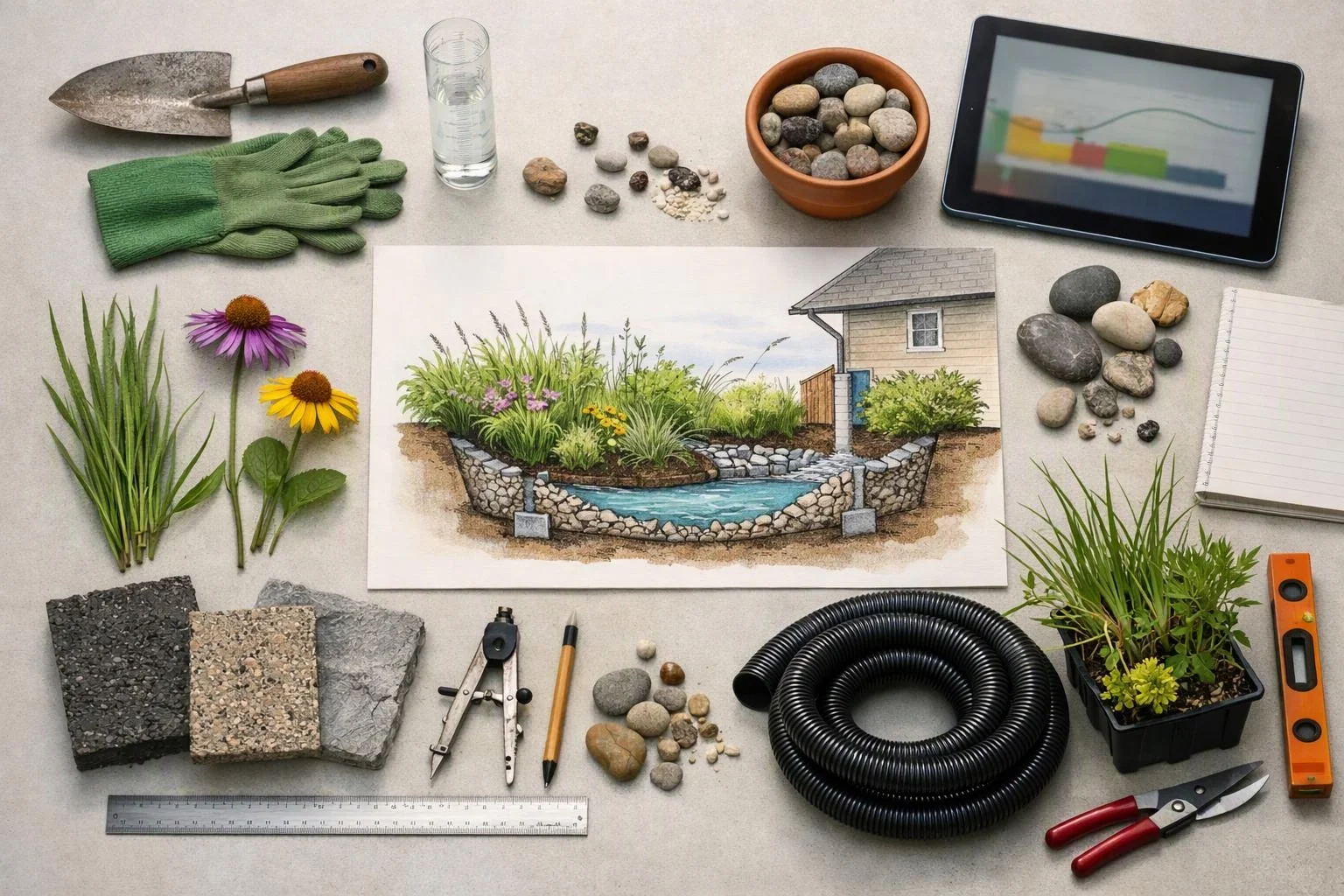
A Rain Garden works by guiding runoff into a shallow, planted depression. The soil and plant roots slow the water, catch some sediment, and allow water to soak into the ground. A gentle overflow path helps direct extra water away from buildings.
Related glossary terms: Drainage Swale, Infiltration Trench, Soil Amendment.
Plant selection depends on changing soil moisture. Native plants suited to wet conditions can handle the basin after storms. Drier areas around the edge need plants that tolerate normal garden soil. Native plant landscaping can connect the basin with the rest of the yard.
Common Parts
- Inlet or swale that guides runoff.
- Mulched planting area that protects the soil.
- Overflow route for water beyond the basin.

Expert Note
When we plan a rain garden, we trace where roof and surface runoff travels. We check the soil, slope, drainage path, and plant exposure before placing the basin. Our team chooses native plants that can handle both saturated soil after rain and drier conditions between storms.
Rain Garden in Practice: A Real-World Example
A Maple Valley yard could direct runoff from a downspout into a shallow planted basin near the lawn. Native shrubs and flowering plants can handle wet soil after rain while the basin drains between storms.
Related Services
Related Terms
Drainage Swale
A drainage swale is a shallow, gently sloped channel that guides stormwater across a landscape. The…
Infiltration Trench
An Infiltration Trench is a shallow, gravel-filled channel that collects stormwater and lets the water soak…
Soil Amendment
A Soil Amendment is a material mixed into existing soil to improve its structure, drainage, moisture…
Underdrain
An underdrain is a buried drainage system that collects excess water below the soil surface and…
LandscaperMaplevalleywa.com
Have Questions About Rain Garden?
Contact LandscaperMaplevalleywa.com for practical guidance on Rain Garden and related landscape architect company work in Maple Valley.