Signs Your Paver Patio May Have a Drainage or Base Problem
Signs of paver patio drainage or base problems include standing water, uneven or sinking pavers, rocking stones, and missing joint sand. LandscaperMaplevalleywa.com checks the surface, base, and water path to identify the likely cause.
Written by Adam Gorski · 29 years of local experience
Request an EstimateWhat Do Paver Patio Drainage and Base Problems Look Like?
Paver patio drainage and base problems appear as water, movement, settlement, or joint-sand loss across the surface.
Patio drainage depends on the surface slope, the paver base, and the path surface water takes away from the hardscape. A soft base can cause movement even when the water problem is not easy to see.
Our team checks these connected conditions before choosing a repair. Adam Gorski provides the guidance for this page.
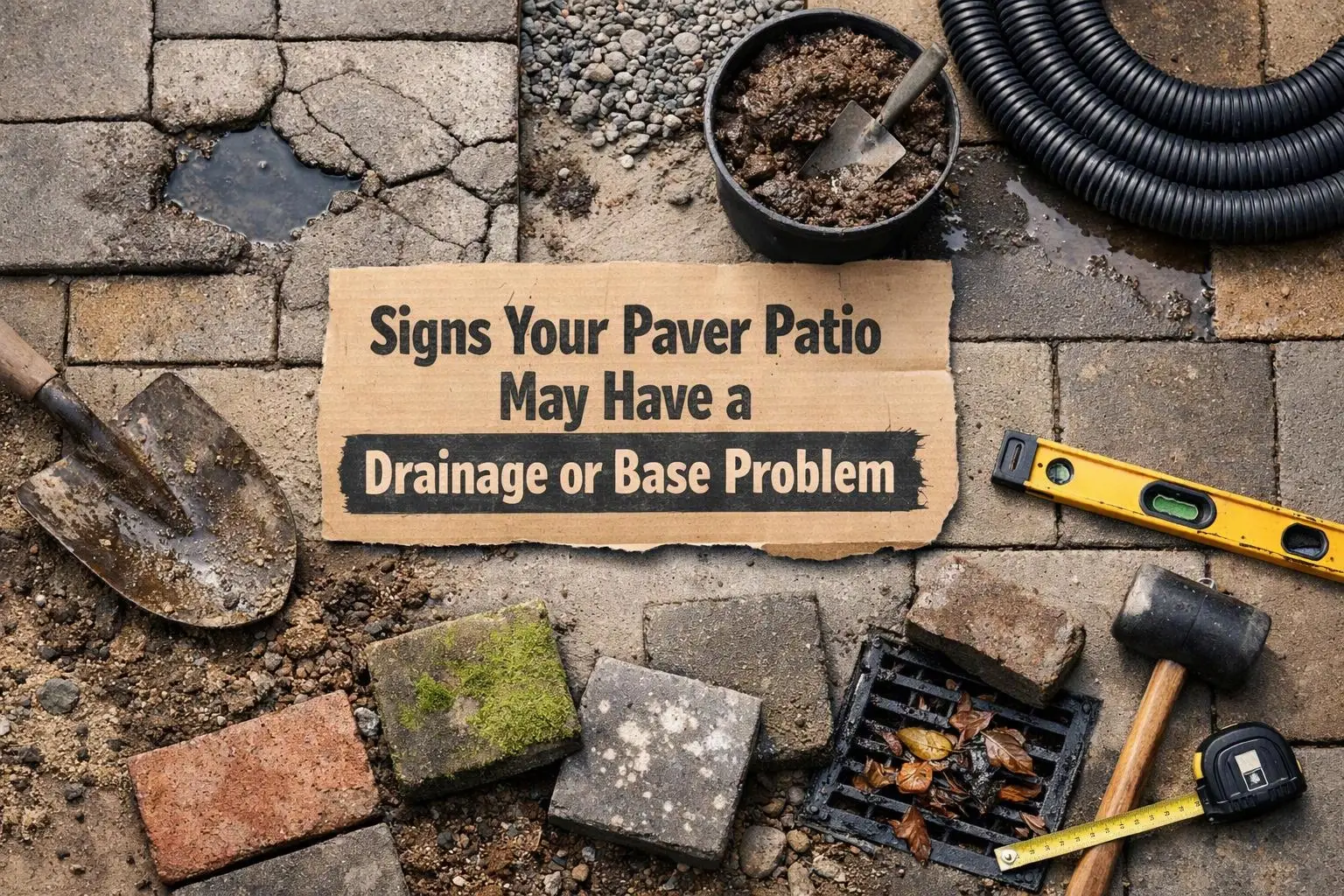
Warning Signs Your Paver Patio Needs Attention
A paver patio needs attention when water, movement, or joint loss keeps returning after normal weather.
These signs can point to surface drainage trouble, base failure, soil settlement, or edge movement. One symptom may have more than one cause, so we look at the whole patio.
Why Is Water Pooling on a Paver Patio?
Water pools on a paver patio when the surface slope, base, or nearby drainage path cannot move runoff away.
A weak patio slope can leave water in low areas. Compacted base material can also settle, creating depressions where runoff collects.
Downspouts may send concentrated water toward the patio. Nearby land grading can add surface runoff that overwhelms the existing drainage route.
We trace the water path from the patio and surrounding yard. This helps separate a patio water problem from a broader yard drainage issue.
Why Are Patio Pavers Sinking or Rocking?
Patio pavers sink or rock when the supporting base loses strength, shifts, settles, or erodes below individual stones.
The aggregate base spreads loads beneath the patio. Poor compaction, settled soil, or water movement can leave that support uneven.
Bedding sand helps position each paver, but it can't correct a failing foundation below it. Replacing one stone may provide only temporary relief when the surrounding base has moved.
We check paver alignment, bedding sand, the aggregate base, and visible soil settlement. Those findings show whether the problem is local or spread across the patio.
Why Is Sand Washing Out Between Patio Pavers?
Joint sand washes out when moving water repeatedly travels across or beneath the paver joints.
Surface runoff can carry sand away when the patio slope directs water through the joints. Erosion can also occur below the pavers when the base has open areas or weak spots.
Washed-out sand leaves eroded joints that allow more movement between pavers. Muddy joints may show that water is reaching the base instead of flowing across the surface.
We look for the source of the water before replacing joint sand. New sand won't last if patio drainage continues to direct runoff through the same joints.
How We Check a Paver Patio Drainage or Base Problem
We check a paver patio drainage or base problem by following water movement and reviewing surface support.
Our inspection connects visible symptoms with the conditions below and around the patio. We explain the likely cause before discussing repair options.
Can You Fix the Problem Yourself or Should We Help?
You can inspect visible symptoms safely, but recurring movement or water usually needs a deeper review.
Simple observations can help you describe the problem. Our team checks the patio, base, and surrounding drainage path when the cause isn't clear.
| Factor | What you can do yourself | What we do |
|---|---|---|
| DIY patio inspection | Watch where water collects and note loose or uneven pavers. | We connect the visible signs to likely surface and base causes. |
| Paver repair | You can identify affected areas and keep foot traffic off unstable spots. | We reset affected pavers when the supporting conditions are suitable. |
| Drainage correction | You can observe downspout discharge and nearby runoff during rain. | We review the drainage route and plan a correction for the water source. |
| Base replacement | You can document repeated settlement with notes and photos. | We determine whether the base needs correction below the affected area. |
| Land grading | You can identify whether surrounding ground sends water toward the patio. | We assess grading and connect it with the patio drainage plan. |
| Yard drainage | You can keep visible drains and discharge points clear of debris. | We review broader yard flow when the patio is not the only affected area. |
DIY observations are useful when they stay within safe ground-level checks. Contact us when pavers keep moving, water reaches the base, or the drainage route needs correction.
What Repair Does a Paver Patio Drainage Problem Need?
A paver patio drainage problem may need joint-sand replacement, base correction, surface regrading, or a new drainage route.
The repair depends on where water travels and how much support has changed. Localized joint loss may need different work from broad paver settlement.
We may correct the paver base, restore the patio slope, improve land grading, or address yard drainage. Our team explains what the quote includes and how the proposed work addresses the cause.
When the patio needs a larger rebuild, our Paver Patio Installation service can address the surface, base, and drainage plan together.
How Do You Prevent Drainage and Base Problems After Repair?
You can reduce repeat problems by keeping water away from the patio base and maintaining clear drainage paths.
Proper paver base compaction supports the surface and helps limit paver settlement. A consistent patio slope also helps surface runoff move toward its planned outlet.
Keep joint sand in place and watch for early signs of erosion. Check downspout discharge and remove blockages from drainage routes before water reaches the patio.
Our team can review recurring water movement and recommend maintenance that fits the patio and surrounding yard. Request an assessment through our contact page so we can discuss the site conditions.
Questions About Paver Patio Drainage Problems
Can poor drainage damage a paver patio?
Yes, poor drainage can damage a paver patio by washing out joint sand, weakening the base, and causing settlement. Repeated water movement can also create muddy joints and uneven pavers.
Can new joint sand fix pavers that keep sinking?
New joint sand can't fix pavers that keep sinking when the base, soil, or drainage path has failed. Our team checks the support below the pavers before recommending joint-sand replacement.
What should you check after heavy rain exposes patio drainage problems?
After heavy rain, check for standing water, new low spots, muddy joints, washed-out sand, and changed downspout discharge. These signs help our team trace the drainage path and identify possible base failure.
Contact us when recurring water or paver movement affects your patio. We can review the surface, base, and drainage route and explain the next step.