Signs Your Sprinkler System Needs Repair
A sprinkler system may need repair when heads spray weakly, zones stay dry, water leaks, soil stays soggy, or watering won't stop. At LandscaperMaplevalleywa.com, we check the system, identify the failed part, and explain the repair needed.
Written by Adam Gorski · 29 years of local experience
Request an EstimateWhat Are the Main Signs Your Sprinkler System Needs Repair?
Sprinkler system problems show up when water flow, coverage, timing, or soil moisture changes.
Some signs affect one sprinkler head, while others point to an irrigation zone or controller problem. Look for these changes before dry lawn areas or water waste spread.
We compare the affected area with the watering schedule and nearby soil moisture. That helps us separate a sprinkler head issue from a larger water line or zone valve failure.
Why Are Sprinkler Heads Not Spraying Properly?
Sprinkler heads may spray poorly because clogged nozzles, damage, low pressure, or misalignment restrict coverage.
A clogged sprinkler nozzle can narrow the spray pattern and create dry patches. Dirt, mineral buildup, or plant growth can block the opening.
Low water pressure can weaken several heads at once. A damaged head may leak around its body or fail to pop up correctly.
We inspect the nozzle, head position, spray pattern, and nearby water flow. Our crew can complete sprinkler head repair or nozzle replacement when the part cannot provide even landscape coverage.
Why Is One Sprinkler Zone Not Working?
One sprinkler zone may stop working when its valve, controller signal, wiring, or water supply has a fault.
When other zones work normally, the problem may be limited to that zone valve or its wiring. A controller setting can also prevent the zone from starting at the correct time.
A blocked or damaged water line can reduce flow to the zone. We trace the signal from the irrigation controller to the valve, then check whether water reaches the sprinkler heads.
Our irrigation diagnosis identifies whether the repair involves controller troubleshooting, wiring, zone valve repair, or the water supply.
What Causes Soggy Spots When Sprinklers Are Off?
Soggy spots can indicate an underground leak, a broken pipe, a leaking valve, or a drainage problem.
A buried pipe leak can keep releasing water even when the irrigation system is off. A zone valve that does not close fully can also allow slow water flow.
Water pooling near one head often points to a local leak. Broad soggy soil may involve drainage, grading, or water moving through the landscape.
We inspect the pattern, check the zone valve, and trace the water line. If the irrigation system is not the cause, our findings can help separate a sprinkler issue from the concerns covered in “Signs Your Yard Has a Drainage Problem.”
Why Does a Sprinkler System Keep Running?
A sprinkler system may keep running because of a controller setting, stuck valve, wiring fault, or continuous water flow.
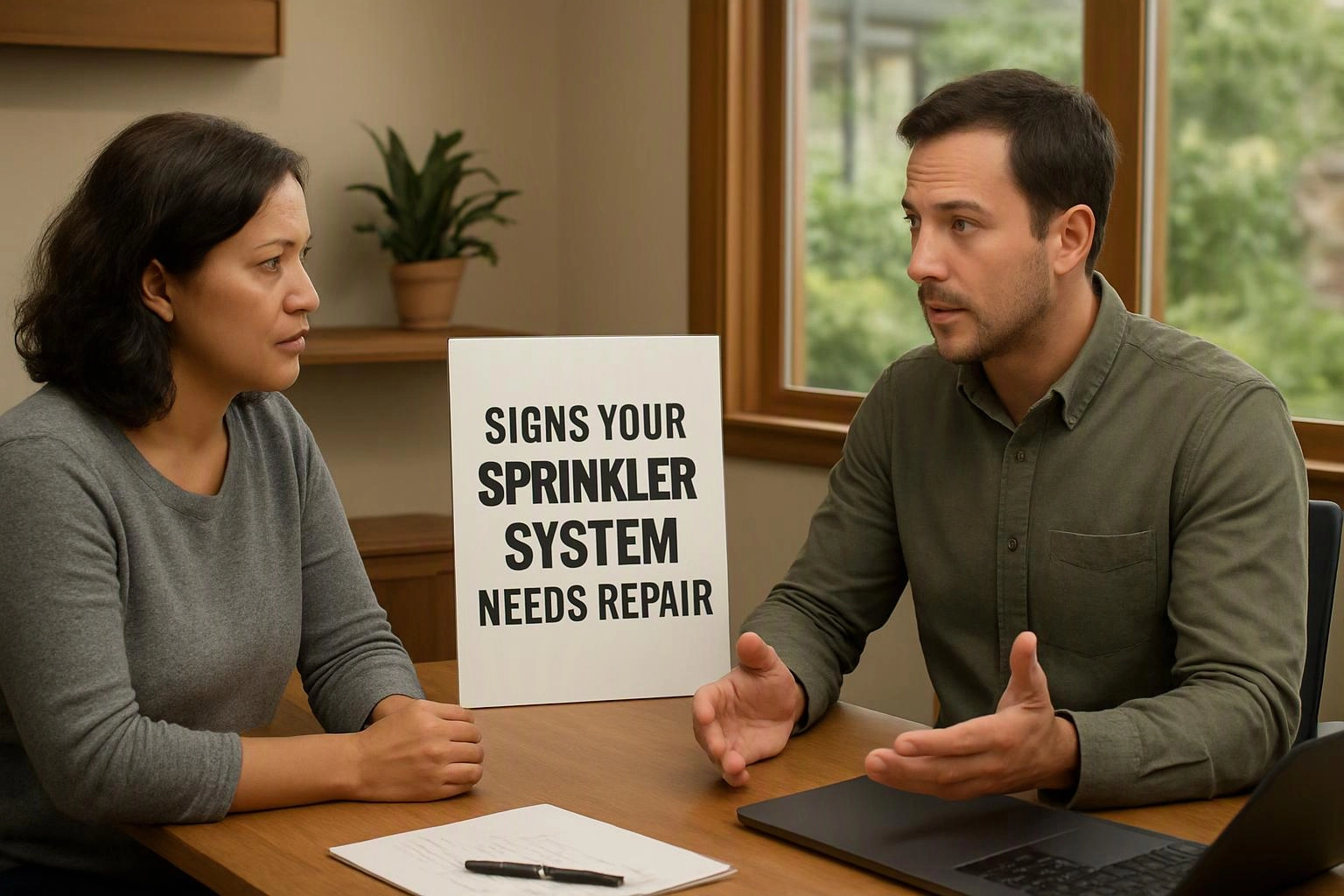
An incorrect run time can make a zone operate longer than intended. A stuck zone valve can keep water moving after the controller sends the stop signal.
Wiring faults may cause the controller to activate a valve unexpectedly. Continuous flow after the schedule ends can also point to a valve or water line problem.
You can stop the irrigation controller if the system keeps running and water waste is increasing. Contact our team when the cause isn't clear, because valve wiring and buried water lines need careful diagnosis.
What Can You Check Yourself, and What Should We Repair?
You can safely observe coverage and controller settings, while we diagnose valves, wiring, leaks, and buried components.
Simple observations help us understand the symptom. Electrical connections, pressurized water lines, and buried components require controlled testing by our crew.
| Factor | What you can do yourself | What we do |
|---|---|---|
| Sprinkler head | Observe weak spray, damage, or a changed spray pattern. | Inspect the head, nozzle, alignment, and flow. |
| Controller | Review the watering schedule and active zones. | Test controller signals and identify control faults. |
| Zone valve | Note whether one zone fails or continues running. | Diagnose valve operation, wiring, and water flow. |
| Irrigation repair | Record dry patches, soggy areas, and visible leaks. | Repair failed parts and restore balanced coverage. |
Don't open buried lines or alter irrigation wiring if you aren't trained for that work. Our team uses a controlled inspection process to protect the system and the surrounding landscape.
How We Diagnose Sprinkler System Problems
We trace the symptom through the sprinkler system and identify the part causing the failure.
Our process connects the visible lawn problem with its likely component. We then recommend irrigation system repair that addresses the cause, not only the symptom.
When Should You Schedule Irrigation System Repair?
Irrigation system repair should be scheduled when watering problems return, damage is visible, or one zone cannot maintain coverage.
Early inspection can limit water waste and protect landscape health. Ongoing dry patches, water pooling, or uneven sprinkler coverage can worsen when the failed part remains in use.
Schedule an inspection when you notice a broken sprinkler head, a buried pipe leak, or a system that keeps running. You can learn more about our Irrigation System Repair process and request an exact quote based on the system condition.
Questions About Sprinkler System Repair Signs
Can a clogged sprinkler head cause dry patches?
Yes, a clogged sprinkler head can cause dry patches by restricting the nozzle and changing the spray pattern. We inspect the nozzle and head to decide whether cleaning, alignment, or replacement will restore coverage.
Can a sprinkler leak underground?
Yes, a sprinkler can leak underground through a broken pipe, damaged fitting, or leaking zone valve. Soggy soil, water pooling, or unexplained flow can help point us toward the buried leak.
Should I turn off my sprinkler system when a zone keeps running?
Yes, you should turn off the sprinkler controller when a zone keeps running and water waste is increasing. Our team can then test the controller, wiring, valve, and water flow to locate the fault.
What should I include when requesting an irrigation repair quote?
Include the affected zone, visible dry or soggy areas, controller behavior, and any water leak you noticed. Share when the issue began and whether other zones still work, so we can plan a focused inspection and explain the repair estimate.
Our team uses symptom-based diagnosis to connect lawn problems with the right irrigation component. Contact us through our contact page to request an inspection and quote.
Get a Free EstimateAuthor: Adam Gorski