Sod or Artificial Turf: Comparing Lawn Installation Options
Sod offers living grass and a natural look, while artificial turf offers lower routine mowing and watering needs. LandscaperMaplevalleywa.com compares installation needs, cost drivers, maintenance, comfort, and long-term fit so you can choose with confidence.
Written by Adam Gorski · 29 years of local experience
Request an Estimate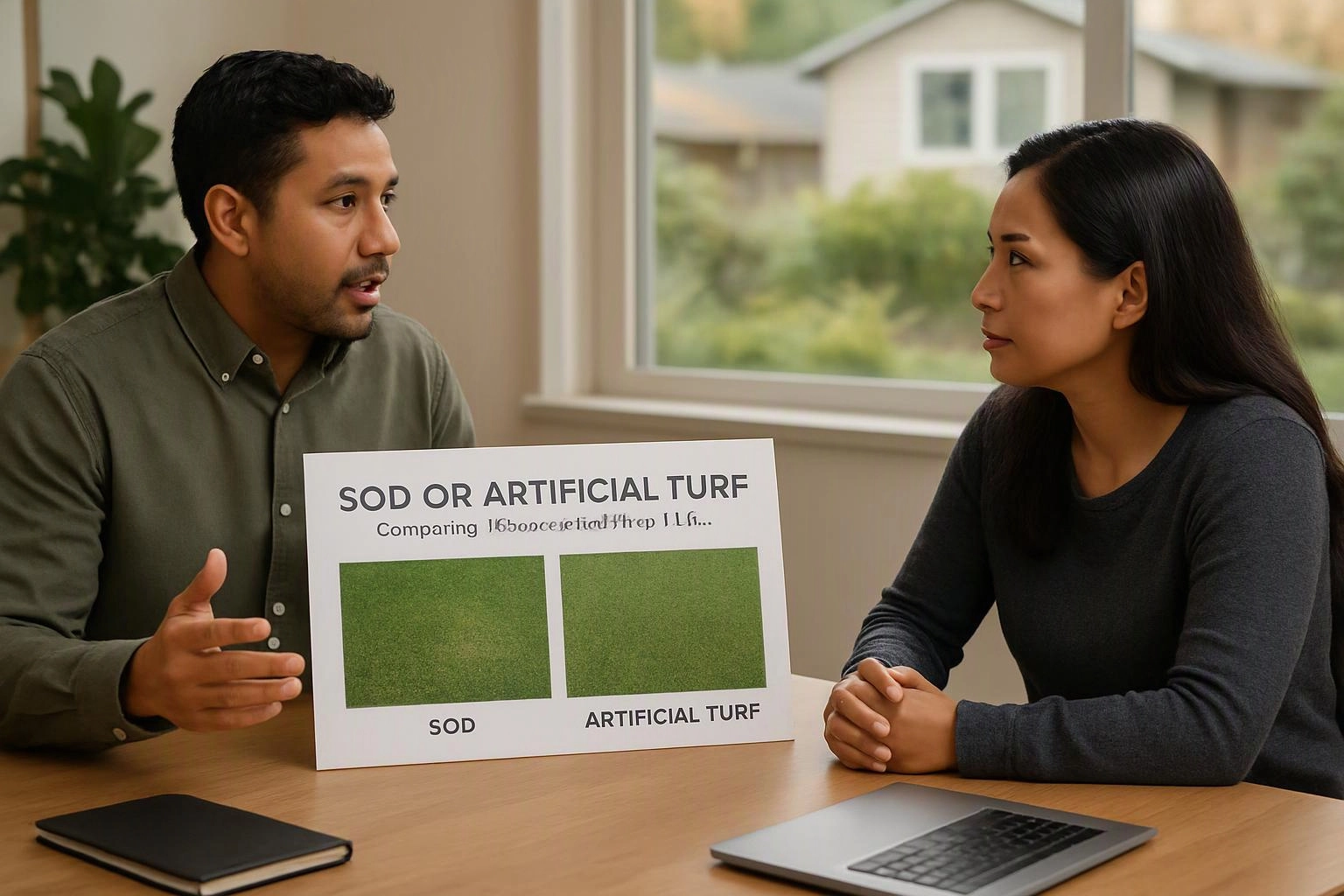
Author: Adam Gorski
Sod vs Artificial Turf at a Glance
Sod suits buyers who want living grass, while artificial turf suits buyers who want a consistent lawn with less routine mowing and watering.
- Sod: Best for a natural lawn, soil contact, and living turfgrass.
- Artificial turf: Best for steady coverage, pet areas, and high-use spaces.
| Factor | Sod | Artificial turf |
|---|---|---|
| Installation cost drivers | Sod preparation, soil work, grading, irrigation, and lawn area | Excavation, aggregate base, drainage, edging, seams, and lawn area |
| Installation timeline | Requires careful watering during root establishment | Requires base preparation, surface placement, seaming, and edge finishing |
| Lawn maintenance | Mowing, watering, weeding, and seasonal care | Routine mowing and watering are reduced, but cleaning and surface care remain |
| Use cases | Natural lawns, cooling surfaces, and soil-connected landscapes | Pet areas, play spaces, and high-use lawns needing steady coverage |
What Makes Sod Installation Different?
Sod installation places living grass over prepared soil, so the lawn needs careful watering while roots establish.
Our crew begins with soil preparation and site grading. We check the surface so the turfgrass has firm, even contact with the soil.
Fresh sod needs consistent watering as roots connect with the soil. Irrigation planning can help protect the natural lawn during establishment.
Our Sod Installation service focuses on proper preparation, placement, edge work, and cleanup.
Why Choose Sod for Your Lawn?
Natural grass works well when comfort, living roots, and a familiar lawn appearance matter most.
Best for: Sod is best for buyers who want living grass and natural soil contact.
What Makes Artificial Turf Installation Different?
Artificial turf installation builds a finished surface over a prepared base, with drainage, seams, and edges checked during installation.
Our team prepares the ground and places an aggregate base beneath the synthetic turf. The base supports the surface and helps manage water flow.
We review the permeable surface, turf seams, landscape edging, and drainage details. These parts affect appearance, stability, and long-term use.
Why Choose Artificial Turf for Your Lawn?
Artificial grass works well when steady coverage and reduced routine lawn care are key goals.
Best for: Artificial turf is best for buyers who want consistent coverage and less routine lawn care.
What Changes the Cost of Each Lawn Installation?
Installation cost changes with lawn size, site preparation, access, drainage, materials, and finish details.
Sod projects often depend on grading, soil preparation, existing lawn removal, irrigation, and site access. Difficult soil or limited access can add preparation work.
Artificial turf projects often depend on excavation, soil removal, aggregate base, drainage, edging, and seaming. The selected turf and finish details also shape the installation scope.
We review these conditions before preparing an installation quote. Our quote explains the planned work, selected material, preparation needs, and final cleanup.
What Does Lawn Installation Include?
Lawn installation includes site review, preparation, material installation, edge finishing, drainage checks, and cleanup, with the exact work based on the selected lawn system.
Our team explains which steps apply to your property before work begins. We also identify irrigation components, edging, seams, and other finish details in the scope.
How We Compare Your Site Before Installation
Site assessment compares sunlight, drainage, soil, traffic, pets, irrigation, and access before we recommend sod or artificial turf.
Sun exposure affects turf selection and lawn care needs. Slope and soil condition affect grading, drainage, and surface stability.
We also ask how the lawn will be used. Foot traffic, pets, existing landscape features, and access can change the best installation plan.
Which Lawn Option Fits Your Priorities?
Sod is the better fit for living grass and natural soil, while artificial turf is the better fit for consistent coverage and reduced routine lawn care.
Choose sod when lawn appearance, comfort, soil contact, and natural growth guide your decision. Plan for watering, mowing, weeding, and ongoing turf care.
Choose artificial turf when steady coverage, pet use, high foot traffic, and lower routine mowing matter more. Plan for base preparation, drainage, cleaning, and surface care.
Long-term planning should include water use, comfort, durability, maintenance goals, and the way your household uses the lawn.
Plan the Right Lawn Installation
Project scope starts with your lawn goals, site conditions, material selection, and preparation needs.
We review the property and explain whether sod or artificial turf better matches your priorities. Our team then outlines the installation quote, preparation work, finish details, and cleanup.
For living grass, our Sod Installation process connects material selection with soil preparation, grading, irrigation, and root establishment.
Contact us with your lawn goals so we can review the site and prepare an installation quote.
Questions About Sod and Artificial Turf
Can artificial turf be installed over an existing lawn?
Artificial turf usually needs a prepared base, so our team reviews the existing lawn before deciding the removal and excavation scope.
Does sod need an irrigation system after installation?
Yes, sod needs regular watering during root establishment, and our team reviews irrigation coverage as part of site preparation.
Which lawn option is better for dogs and other pets?
Artificial turf can suit pet areas when drainage, cleaning, edging, and surface use are planned correctly, while sod offers natural grass and soil contact.
How does drainage affect a sod or artificial turf decision?
Drainage affects both options because standing water can harm sod roots and reduce artificial turf performance, so our team reviews slope, soil, and water flow before installation.