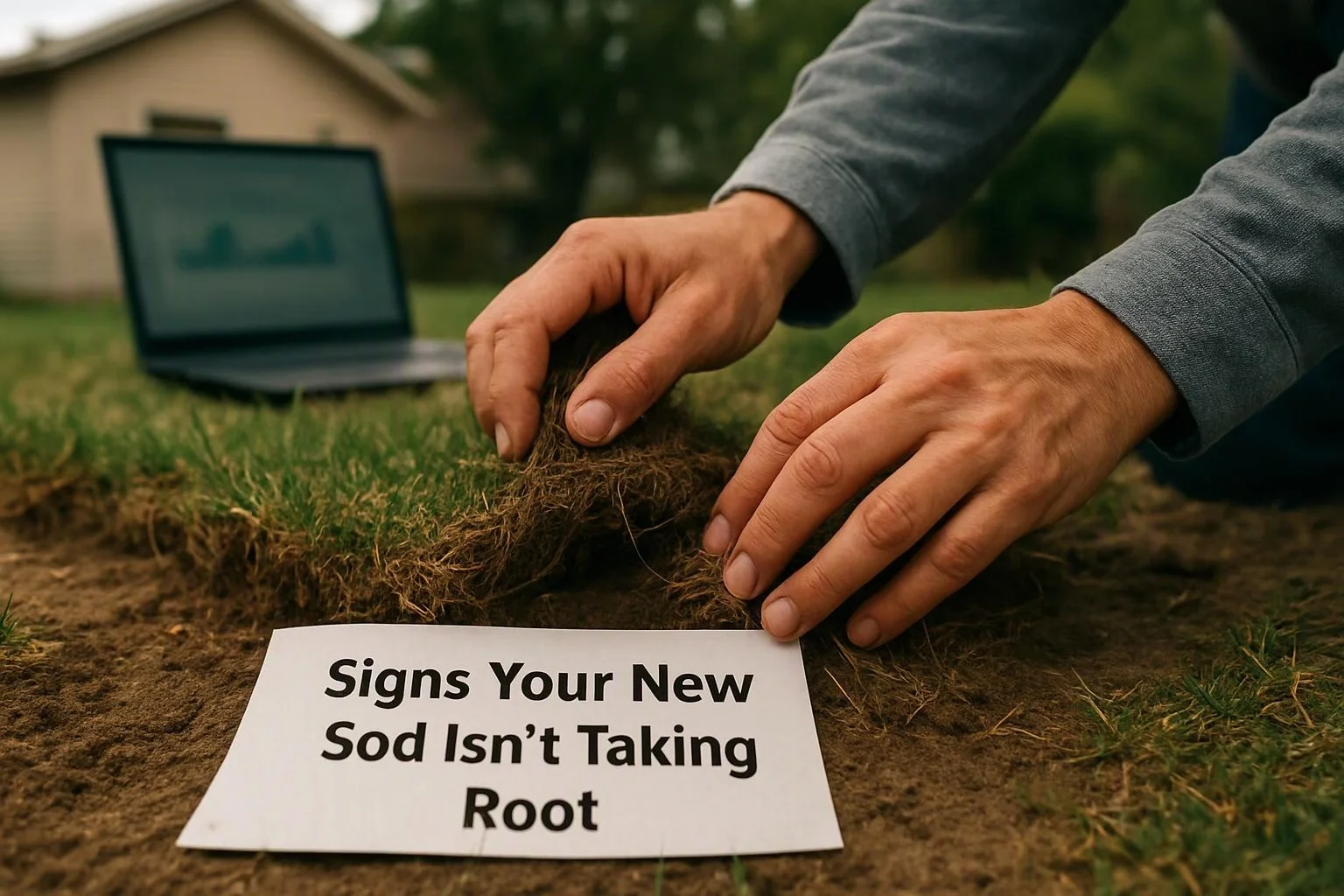
Signs Your New Sod Isn’t Taking Root
Signs new sod isn’t taking root include browning grass, loose pieces, lifted edges, dry soil beneath the sod, and soggy areas that pool water. At LandscaperMaplevalleywa.com, we check watering, soil contact, drainage, and root development to identify the cause. Author: Adam Gorski.
Written by Adam Gorski · 29 years of local experience
Request an EstimateWhat Signs Show That New Sod Isn’t Taking Root?
New sod may not be taking root when the grass browns, the pieces lift easily, or the soil stays unusually dry or wet. These signs point to weak root establishment, but one symptom may have several causes.
Check the following warning signs before changing your watering schedule. Looking at the grass, seams, edges, and soil together gives a clearer answer.
Why Is New Sod Turning Brown?
Brown grass develops when roots cannot get the moisture and soil contact needed to support the blades. Underwatering can dry the sod, while overwatering can leave roots short of oxygen.
Heat stress can increase moisture loss and make dry edges or brown patches appear sooner. Weak root contact also limits how well fresh sod uses water from the soil.
Check the soil moisture beneath the sod, not just the color of the blades. Sod that feels dry below may need better watering coverage, while wet soil may point to poor drainage or overwatered sod.
What Does Loose or Easily Lifted Sod Mean?
Loose sod that lifts easily has not formed strong roots into the soil. Loose edges can also reflect poor soil contact during installation.
Healthy root growth depends on close contact between the sod underside and prepared soil. Air gaps, uneven grading, dry soil, or separated seams can interrupt that connection.
You can gently check an edge without pulling across the lawn. If broad areas lift or seams keep separating, our team can inspect the installation and root contact.
Can Soggy Soil and Pooling Water Stop Sod Roots?
Soggy soil and pooling water can stop sod roots from getting the air they need to grow. Overwatering, compacted soil, and poor yard drainage can all keep water near the surface.
Standing water can weaken root development and create uneven turf health. Low areas may stay wet while nearby sections remain dry because water is not moving through the soil evenly.
Waterlogged sod needs more than a change to the watering schedule when drainage is the main problem. Our team can assess grading, soil compaction, and drainage problems before recommending corrective work.
How Can You Check Whether Watering Is the Problem?
Watering problems show up as uneven irrigation, dry patches, or water that remains on the surface. Checking the soil beneath the sod gives better information than watching the sprinkler alone.
Use these safe checks to compare moisture across the lawn. Do not change the entire watering pattern until you know where coverage is failing.
Uneven watering can create both underwatered sod and overwatered sod in the same yard. Our team can assess the irrigation system when sprinkler coverage or irrigation controls appear to be the cause.
What We Check When New Sod Is Failing
Root development is one of the first things we assess when new sod shows signs of failure. We also check soil moisture, soil preparation, irrigation coverage, drainage, and sod seams.
Our crew looks for gaps between the sod and soil, uneven grades, compacted areas, and poor sprinkler coverage. These findings help separate watering trouble from installation or yard drainage problems.
We use the inspection to explain the likely cause and the corrective work. For future projects, our Sod Installation process focuses on strong root-to-soil contact and suitable soil preparation.
DIY Checks vs Calling Us for New Sod Problems
DIY sod checks can reveal visible moisture issues and loose edges. Our team diagnoses irrigation, drainage, soil contact, and sod installation problems that may not be visible from the surface.
Use the comparison below to decide when an inspection can provide a clearer answer. Stop handling the sod if lifting it may damage roots or seams.
| Factor | What you can do yourself | What we do |
|---|---|---|
| Visible sod condition | Look for brown patches, dry edges, lifted sections, and separated seams. | We inspect the lawn for patterns that connect symptoms to root failure. |
| Soil moisture | Compare the soil beneath dry and healthy-looking areas. | We assess moisture differences and how they affect root contact. |
| Irrigation system | Watch sprinkler heads and note dry spots or uneven watering. | We check coverage and recommend irrigation system repair when needed. |
| Yard drainage | Observe pooling water and areas that stay wet after watering. | We assess grading, compaction, and drainage conditions. |
| Root failure diagnosis | Record changes and avoid pulling large areas of sod. | We connect the symptoms to watering, contact, installation, or drainage causes. |
When Should You Get Help With New Sod?
Failing sod needs an inspection when it keeps browning, lifts across broad areas, or stays wet after watering changes. These patterns can point to root failure, irrigation trouble, or yard drainage problems.
We can determine whether the lawn needs corrected watering, irrigation repair, drainage work, or sod replacement. Requesting a quote helps define the work based on the sod condition, soil preparation, and access to the affected area.
Replacement may not be the first answer when the existing sod can still recover. Our team checks root contact and soil conditions before recommending removal or new sod installation.
Questions About New Sod Rooting
Should I replace brown sod that has not rooted?
Brown sod should be replaced only after watering, soil contact, and drainage conditions are checked. Our team can determine whether the grass is stressed but recoverable or whether sod replacement makes sense.
Can poor drainage cause new sod to fail?
Yes, poor drainage can cause new sod to fail because standing water reduces the oxygen roots need. Our team checks wet areas, soil compaction, grading, and other drainage conditions before recommending corrective work.