How to Recognize Erosion Problems on a Sloped Yard
Signs of yard erosion on a slope include exposed roots, small channels, bare soil, sediment buildup, leaning features, and sinking ground. At LandscaperMaplevalleywa.com, we explain what each sign means and when erosion control, grading, or a retaining wall may help.
Written by Adam Gorski · 29 years of local experience
Request an EstimateAuthor: Adam Gorski
What Are the Main Signs of Erosion on a Sloped Yard?
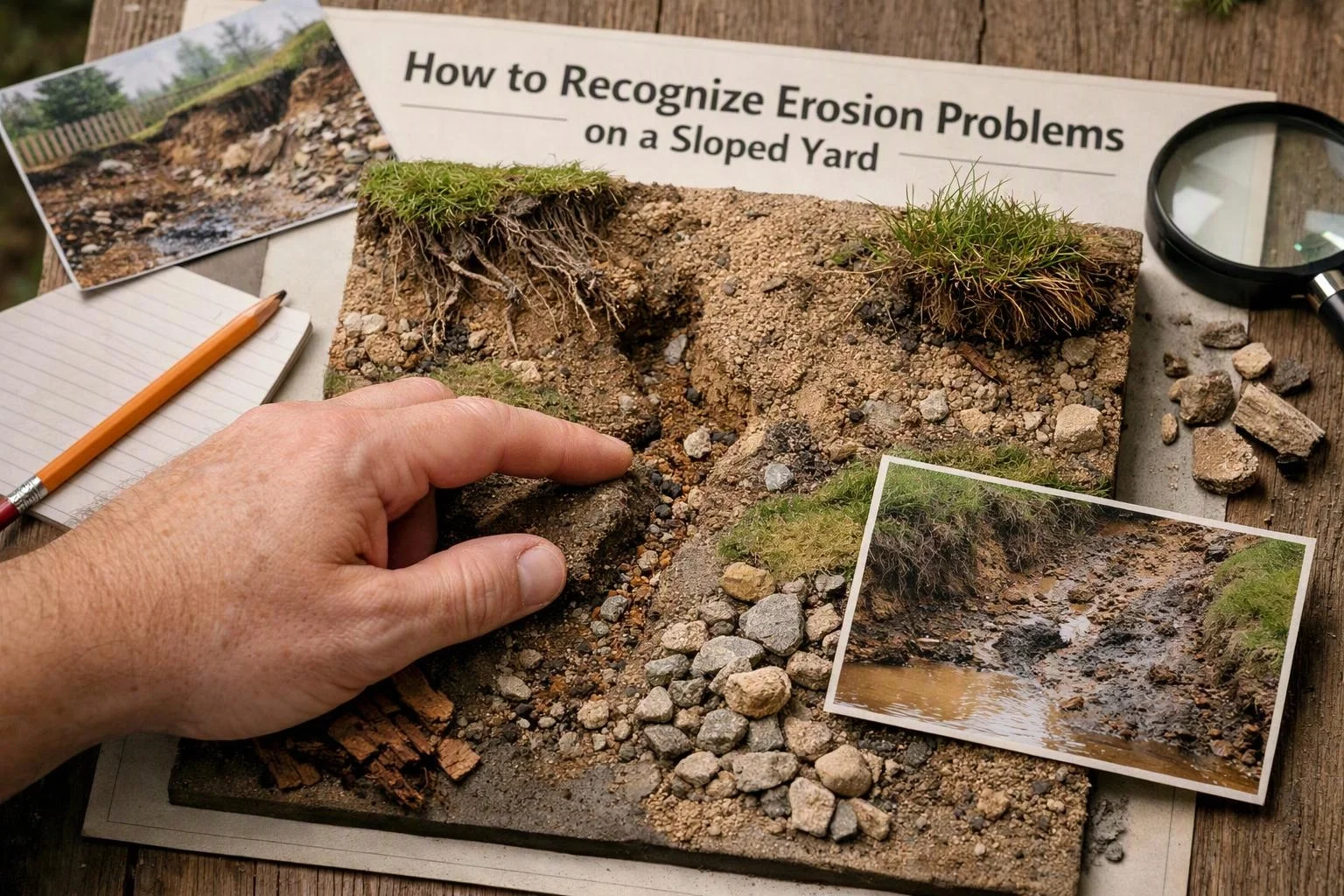
Sloped yard erosion is indicated by visible soil loss, water-flow changes, exposed roots, sediment buildup, and slope movement.
The main signs are exposed roots, bare soil, narrow channels, deep gullies, sediment buildup, leaning features, and sinking ground.
One sign may have more than one cause, but several signs together deserve closer attention. The guide Signs Your Yard Has a Drainage Problem can also help you compare erosion with broader surface-water issues.
Why Does Soil Keep Washing Away on a Slope?
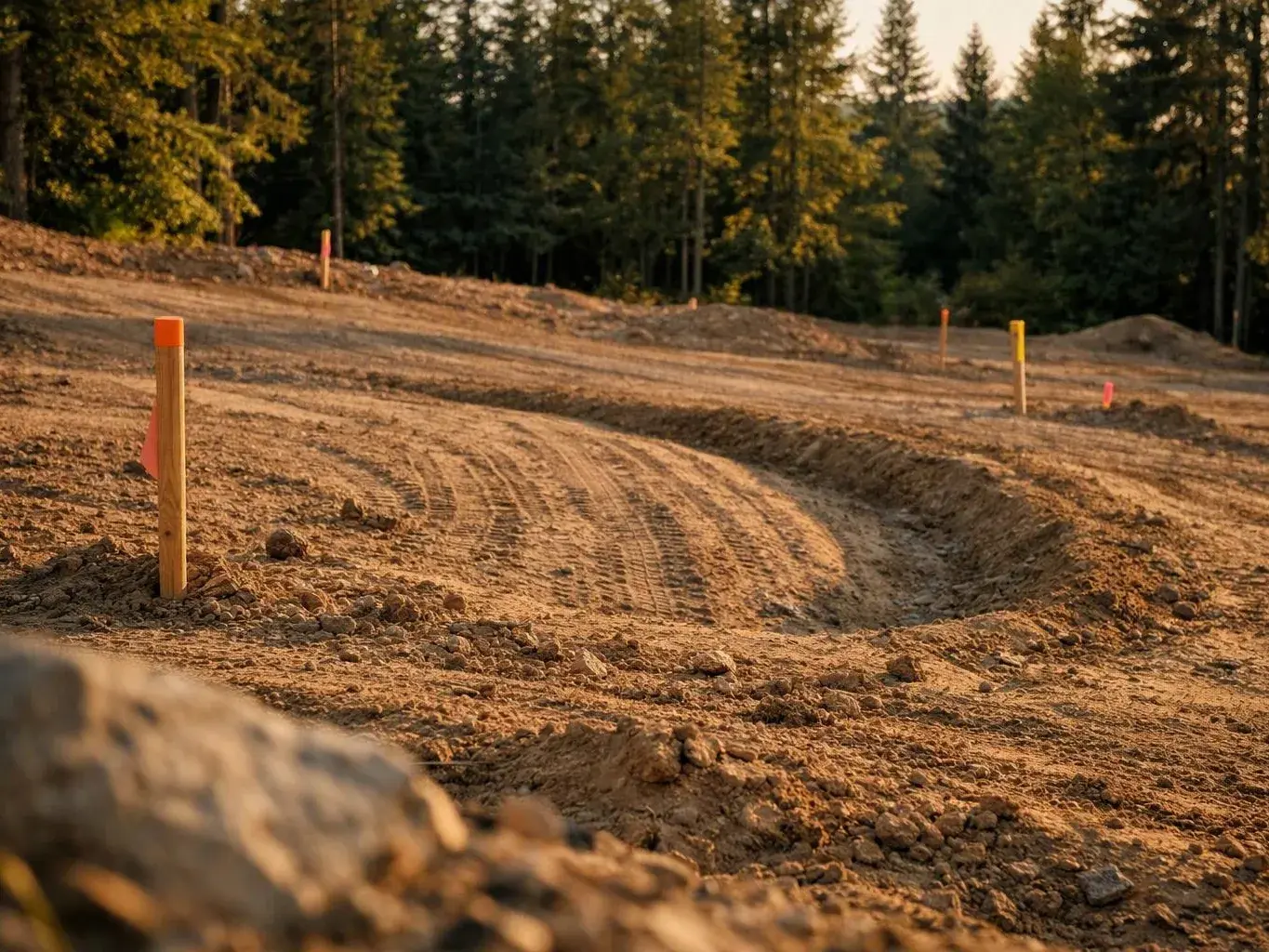
Soil erosion keeps happening when runoff moves quickly over exposed or weak soil and carries particles downhill.
A steeper slope angle gives water more energy as it travels. Loose topsoil can wash away when vegetation cover is thin or missing.
Compacted soil can also increase surface runoff because water cannot soak in easily. Poor drainage may then direct water toward one concentrated path.
Rainfall intensity, soil structure, and slope transitions all affect how much soil moves. Good grading for runoff spreads or redirects water before it cuts channels.
What Causes Exposed Roots in a Yard?
Exposed roots usually mean surrounding soil has been removed by runoff, wind, grading changes, or repeated foot traffic.
Surface runoff can strip topsoil from around tree roots during repeated storms. Root exposure may also follow landscape work that changed the soil level.
Some exposed tree roots are natural, especially near mature trees. Roots that become more visible over time, however, can point to ongoing soil loss.
Protecting the slope requires addressing the cause without burying tree roots too deeply. Our team checks the water path, soil condition, and nearby vegetation before recommending work.
Why Does Soil Collect at the Bottom of a Slope?
Sediment deposition occurs when runoff loses speed and drops the soil it carried downhill.
Soil often collects at the slope base, near a drainage outlet, or where the ground becomes flatter. This pattern shows that soil movement is occurring higher on the yard.
Sediment at the bottom of a slope can block drainage paths and create new low spots. It can also cover plants, hardscape, or other landscape features.
We trace the runoff back toward its source before choosing a control method. Moving the pile alone won't stop the slope from losing more soil.
How Can You Tell if a Slope Needs Erosion Control?
Erosion control is needed when soil loss is active, runoff follows concentrated paths, or movement threatens plants, drainage, structures, or usable yard space.
Repeated rills, growing gullies, and new bare patches suggest active washout. Leaning features, sinking soil, and cracks near a slope may point to a slope stability problem.
Drainage failure deserves prompt attention when water flows toward a foundation, pools against a wall, or cuts across a walkway. A retaining wall may help when the design needs soil retention and a stronger slope transition.
Our team connects the visible pattern to the right mix of drainage, vegetation, grading, and structural support. You can learn more about our Erosion Control service before requesting an assessment.
When Does Land Grading Help With Yard Erosion?
Land grading helps when surface drainage can be improved by changing the ground's runoff direction.
Grading can smooth low spots, shape safer slope transitions, and guide water away from vulnerable soil. The finished surface must still drain without sending concentrated flow toward another problem area.
Our team reviews the slope face, nearby drainage, and existing grades before planning the work. Grading works best when the soil surface and water path are treated together.
When Can a Retaining Wall Help Stabilize a Slope?
Retaining wall installation can help when a slope needs soil retention and a defined change in ground level.
A stable wall design depends on its base, retained soil, and wall drainage. Without proper drainage, water pressure can build behind the wall and affect its performance.
Our team considers the wall base, drainage path, slope movement, and nearby structures. The guide Warning Signs Your Retaining Wall Needs Attention covers visible problems that may need review.
What Can You Do Yourself, and When Should We Help?
You can observe erosion and maintain surface cover, while we assess active soil loss and install the right control system.
Simple observation can show where water starts, where it concentrates, and where sediment settles. Work beyond surface maintenance may affect slope stability, drainage, or nearby structures.
| Factor | What you can do yourself | What we do |
|---|---|---|
| Erosion observation | Photograph bare soil, channels, exposed roots, and sediment after rainfall. | We identify active soil loss and trace the visible runoff paths. |
| Vegetation maintenance | Maintain healthy surface cover and avoid disturbing bare soil. | We plan vegetation support as part of a broader erosion control approach. |
| Runoff inspection | Watch where surface water starts, flows, and collects. | We assess drainage and recommend grading or another suitable control. |
| Structural concerns | Keep away from unstable ground and note changes near structures. | We plan retaining wall installation when soil retention and slope support are needed. |
How We Assess Erosion on a Sloped Yard
Our team assesses a sloped yard by connecting visible soil loss with runoff, drainage, and slope movement.
The work needed depends on the slope angle, soil condition, access, drainage, and amount of active movement. Requesting a quote lets us review those site factors and explain the planned work clearly.
What Should You Do After You Notice Erosion?
Document the affected areas, watch where water flows, avoid disturbing unstable soil, and contact us when erosion continues.
Take photos from the same viewpoints after rainfall. Note new rills, deeper gullies, exposed roots, sediment deposits, leaning features, or sinking ground.
Temporary soil protection can reduce disturbance while you arrange an assessment. Avoid changing a drainage path without understanding where the water will go next.
We can review the pattern, explain the likely cause, and prepare a service quote for the needed erosion control work. Use our contact page to request an assessment.
Questions About Sloped Yard Erosion
Can grass grow back after erosion on a slope?
Yes, grass can grow back when the slope has stable soil, enough surface cover, and controlled runoff. Grass may struggle if water keeps washing away seed and topsoil.
Can mulch stop soil from washing down a slope?
Mulch can slow surface runoff and protect bare soil, but mulch alone may not control concentrated flow or slope movement. The right solution depends on the drainage path and the amount of active soil loss.
What should you do if erosion is moving toward a foundation?
Contact us for an assessment when erosion is moving toward a foundation. Keep people away from unstable ground and document the runoff path while the area is reviewed.
Does standing water at the bottom of a slope mean the yard has drainage problems?
Standing water at the bottom of a slope can mean the yard has drainage problems, especially when sediment blocks the outlet or the soil drains slowly. Our team traces the runoff and checks the low spot before recommending a fix.