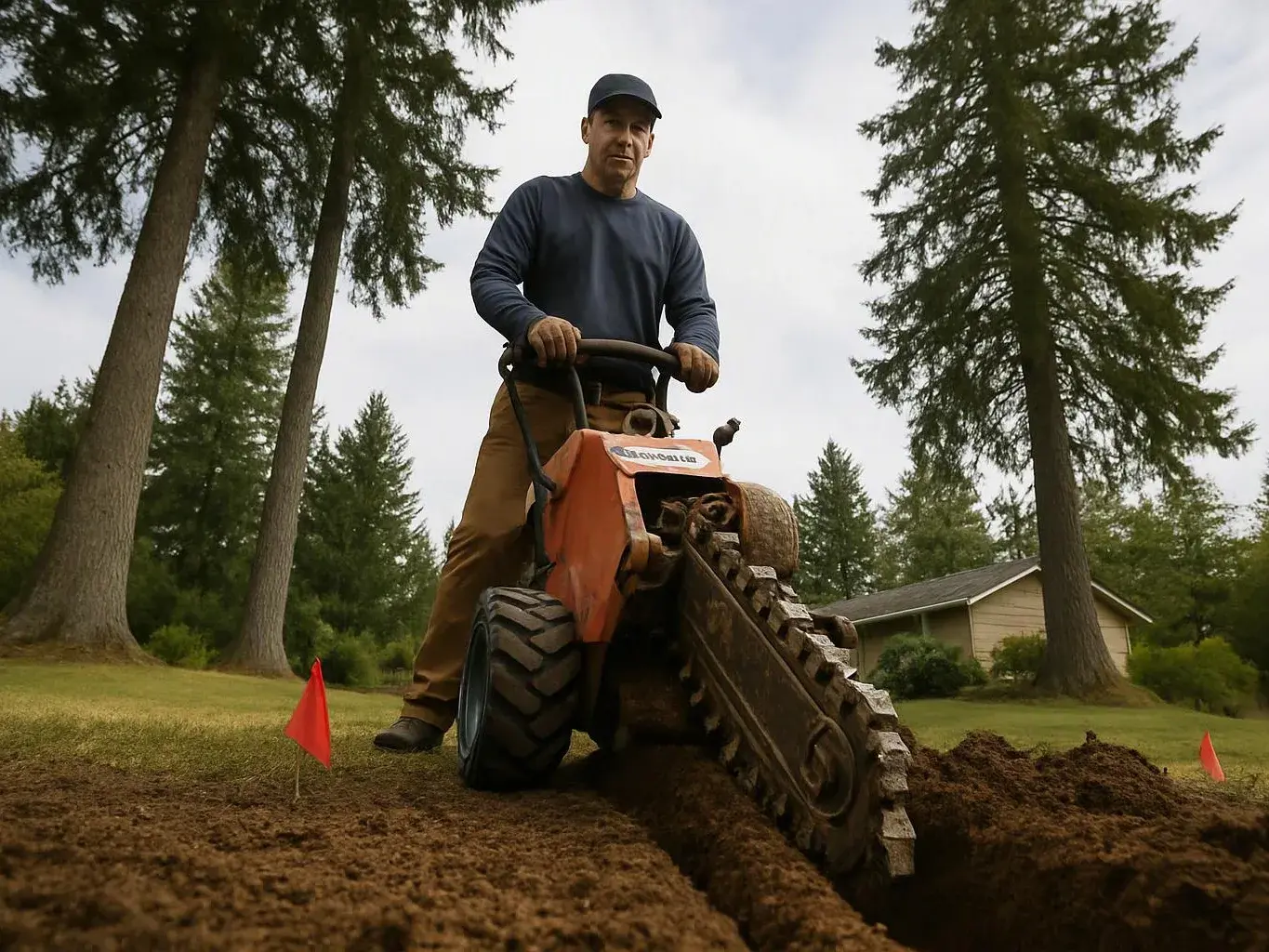
Inspect the route and site conditions
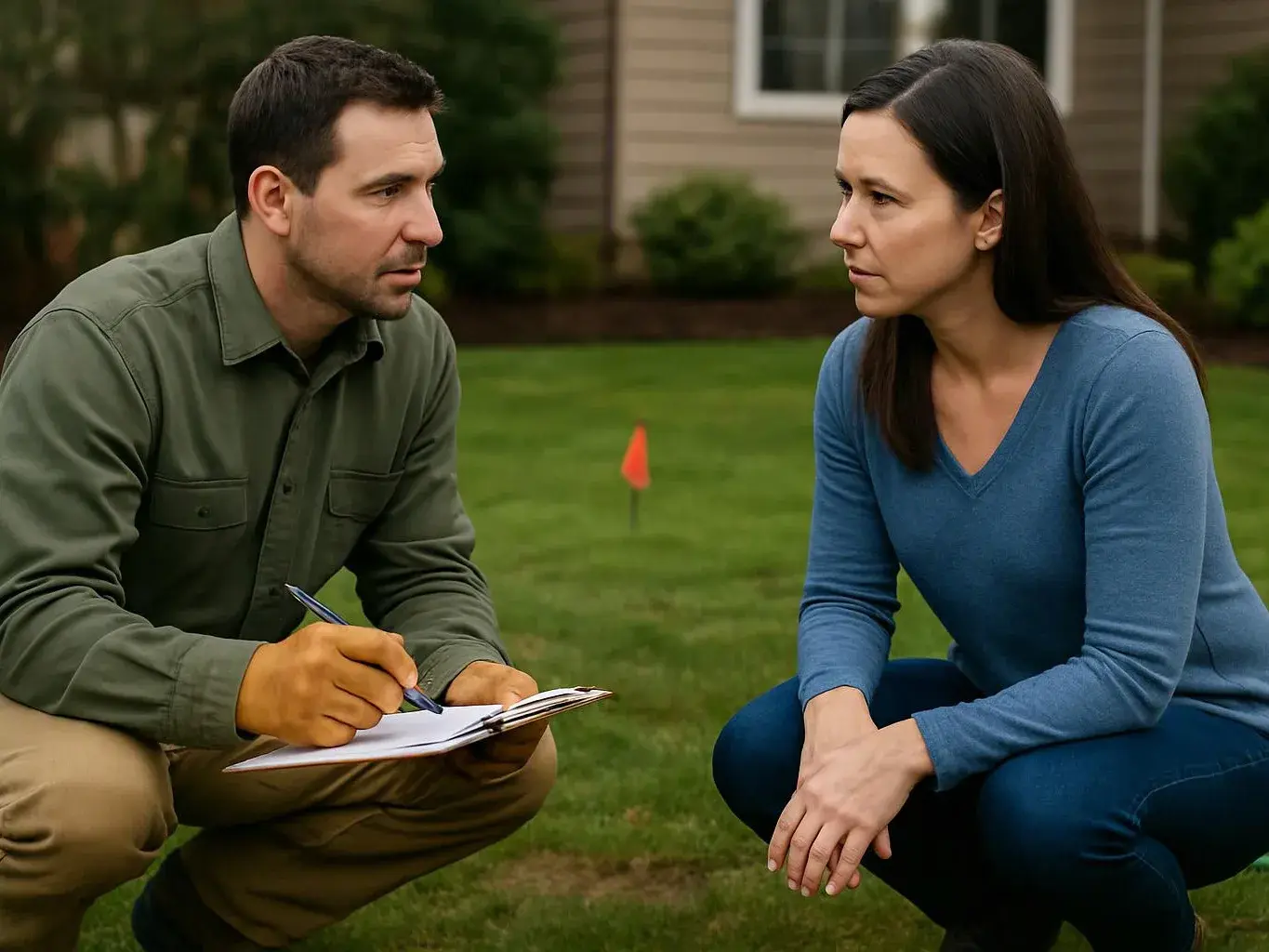
We review soil, slope, drainage, access, existing features, and the system that the trench must serve.
We plan and build trenches for residential properties across Maple Valley. Our work connects drainage, planting, lighting, and outdoor construction needs.
Drainage gains a defined route away from problem areas.
Buried lighting can follow a planned path beneath finished spaces.
Patios, walkways, and planting beds gain room for linked site systems.
Restoration follows the intended grade instead of leaving an uneven cut.
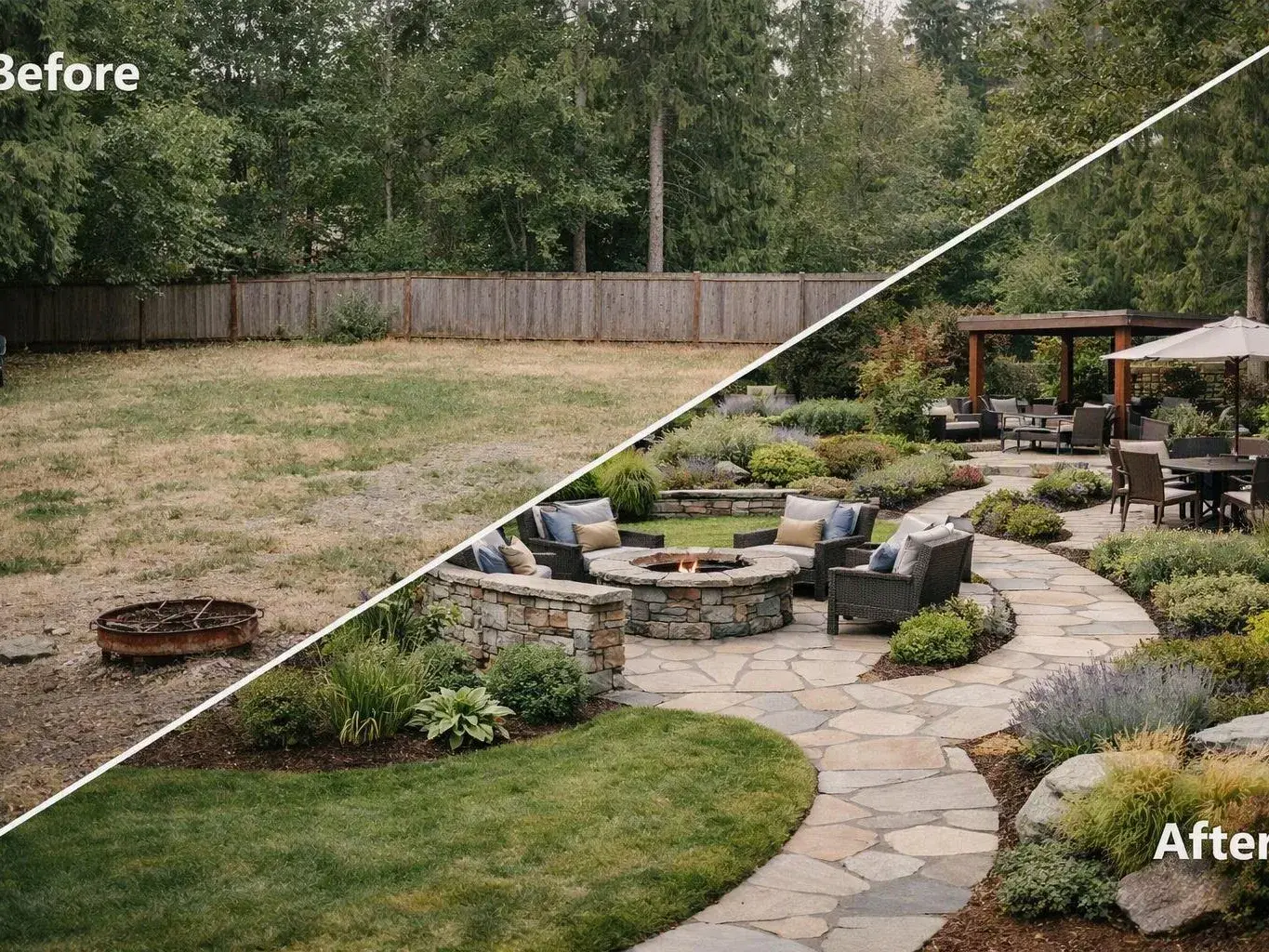
Trenching creates a controlled route below the surface. We use it for drainage, landscape lighting, utility paths, and construction tied to patios, walkways, planting, or water features. The route must fit the property's slope and finished grades. Soil type, access, existing features, and the point where water or wiring connects all affect the work. Our main caution is simple: a trench should solve the full path problem, not only open ground at the visible symptom. A route that ends without a sound outlet can leave water in the same place. We check the connection and the restoration area before closing the work.
Trenching services are ground-excavation services that create narrow routes for drainage, utilities, lighting, or related site work.
A few site details help us assess the route and connect it to the finished project.
We review soil, slope, drainage, access, existing features, and the system that the trench must serve.
We mark the route against the finished design, connection points, grades, and areas that need protection.
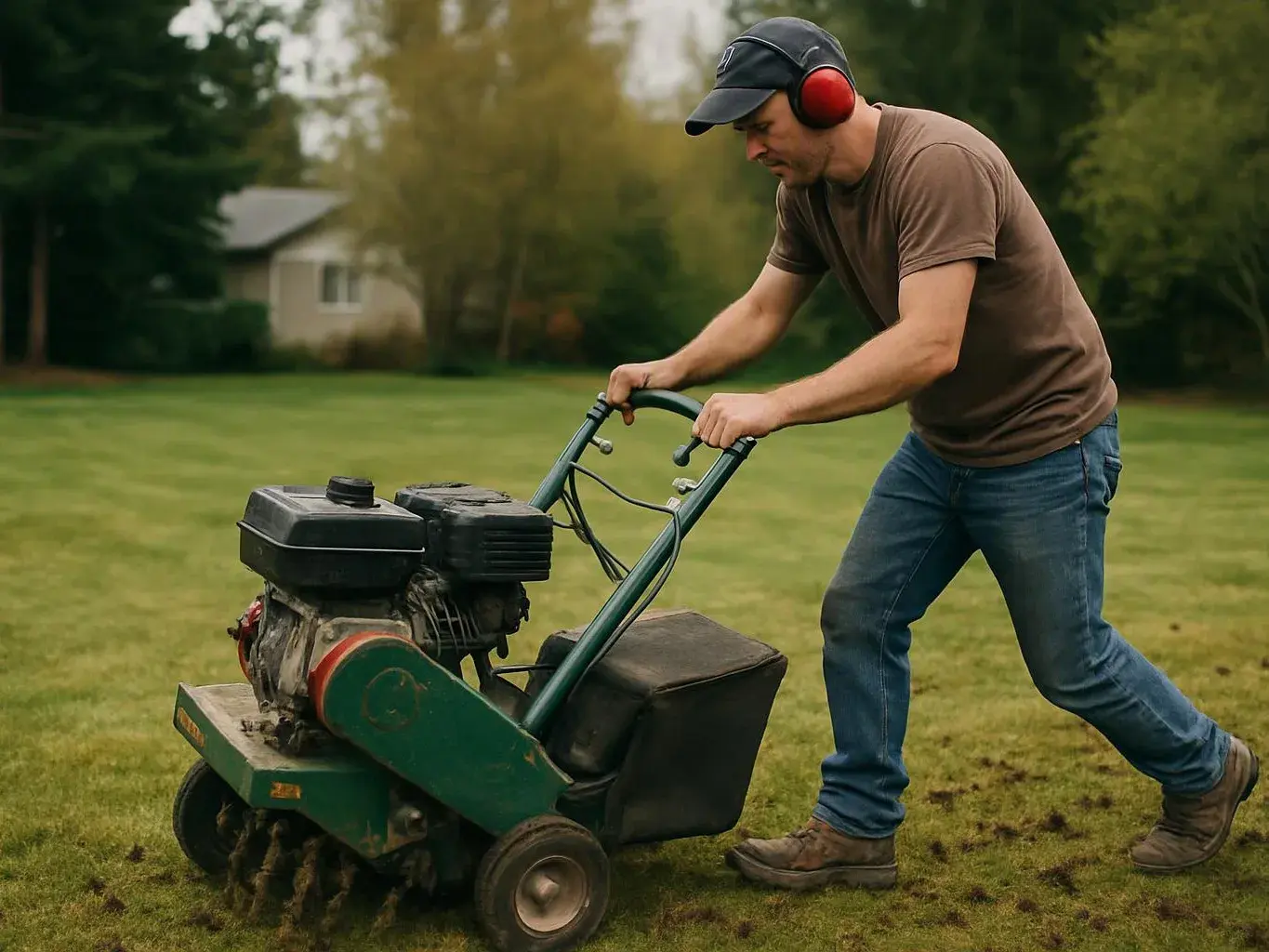
We open the route with care around existing landscape features and keep the trench aligned with its intended use.
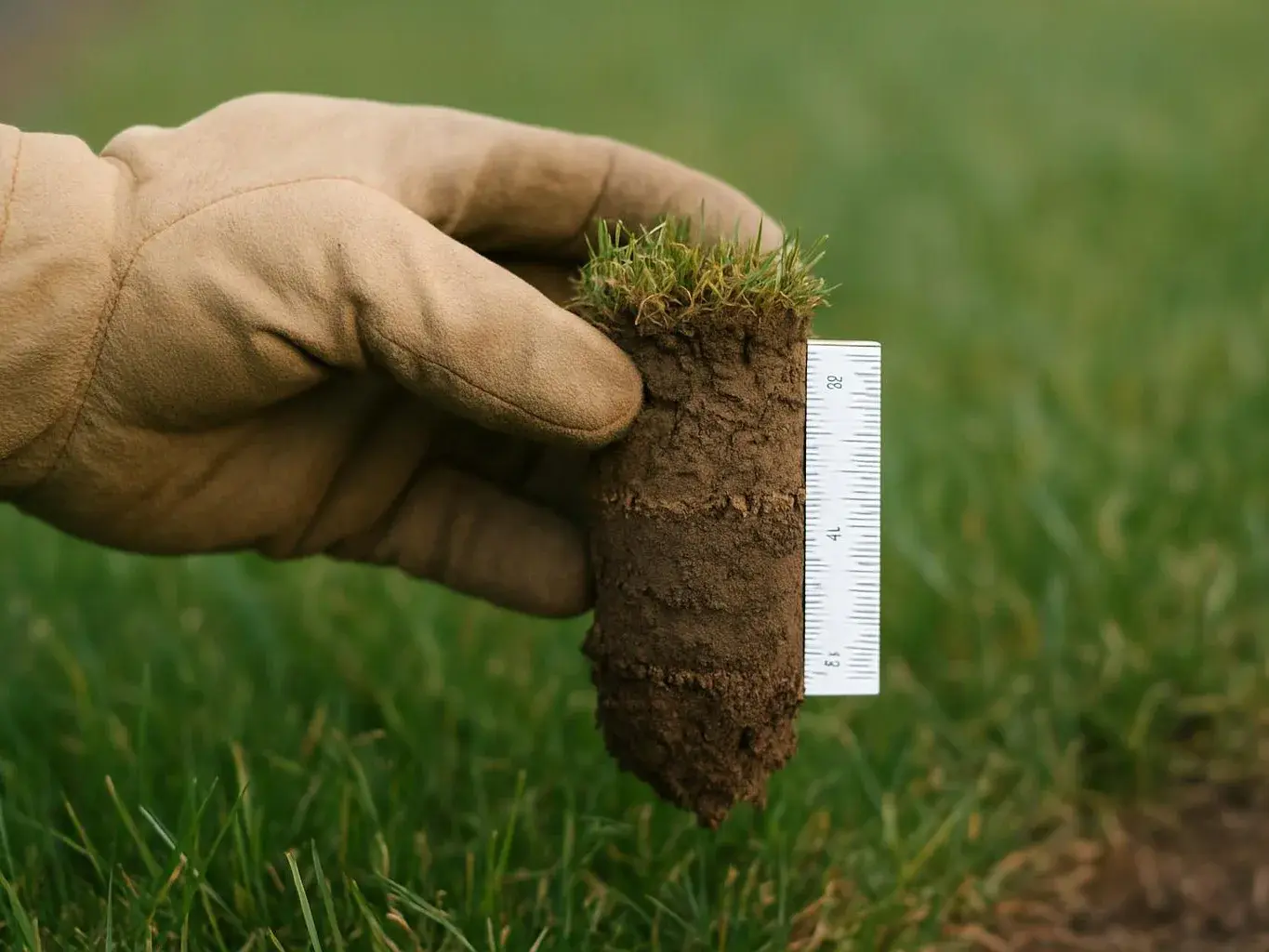
We verify the path, grade, connections, and soil condition before covering the work.
We return the surface to the planned grade and coordinate the next planting, paving, lighting, or drainage step.
We use on-site consultations to inspect trench routes, soil, slope, drainage, access, and the finished landscape.
We coordinate trenching with design and project management so drainage, lighting, planting, and construction follow one site plan.

I had a great experience with Adam Gorski Landscapes. I'm not big on writing reviews, but this company deserves one! From design to build, the process was flawless. Adam and his team exceeded expectations at every turn. We were honest about our budget, and there was no pressure to go over. That was big for us, and something we didn't find with other companies. Equally important was timing and professionalism. They showed up when they said they would, left the site organized and presentable every day, and finished on time and on budget. The work done was amazing, we get compliments on it over and over! I would recommend Adam and his team to friends and family. If you read this and engage with him, you won't be disappointed.

Adam has a great eye for design and always offers suggestions that improve our original vision. He is professional and detail oriented and does great work. We have been happy with everything he has asked us to do and have had him out for several projects. He is also a really nice person and great to work with!

Adam and his team did a wonderful job on our backyard project- including adding a large paver area, building a pre-fab patio structure, a small retaining wall and various tree, shrub and flower plantings. Adam was incredibly helpful in giving ideas and vision to the project and addressing various changes along the way. We are very pleased with the results and would recommend Adam to others.
Start with an on-site review of your route, soil, slope, drainage, access, and finished landscape needs. Request your trenching quote for the planned work.
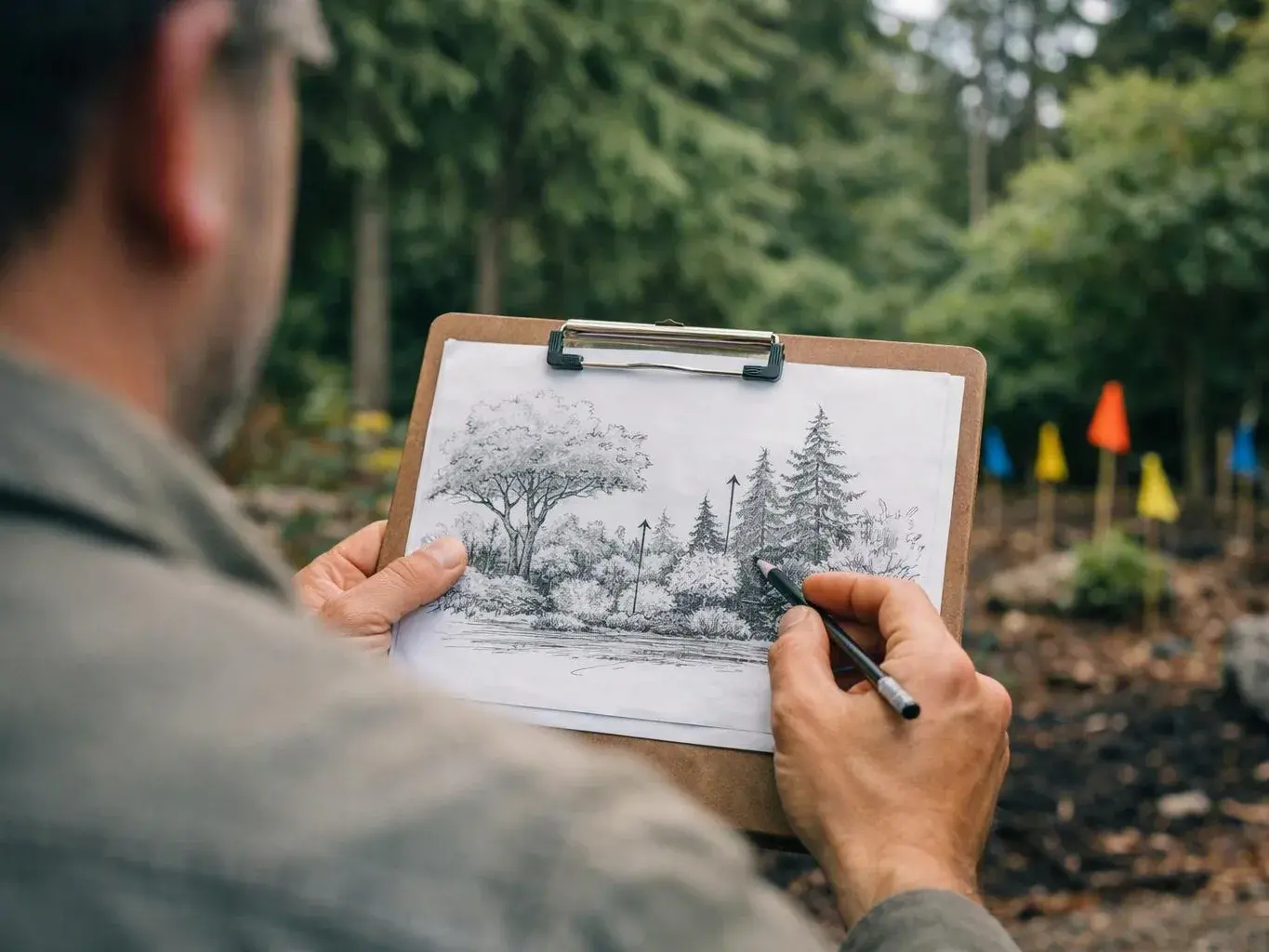
Water that crosses a walkway can point to a missing route or a grade problem below the surface. The trench must connect the low area to a sound outlet, and the finished grade must still support safe walking. Take photos after rain and mark where the water starts, pools, and leaves the property. We can use those details during the site review.
A lighting plan becomes harder when planting beds, paving, and mature roots already fill the route. The work needs careful access and a path that supports the planned fixtures without damaging finished areas. Gather the fixture layout, photos of the beds, and any known site plans. We’ll compare the route with the wider design before excavation begins.
A low strip through a yard may show that earlier fill settled or that water follows the old cut. Adding soil at the surface can hide the issue without fixing the route or its drainage. Mark the settled area and note nearby patios, walls, or planting. We’ll inspect the soil, slope, and connected work before recommending repair or new trenching.